
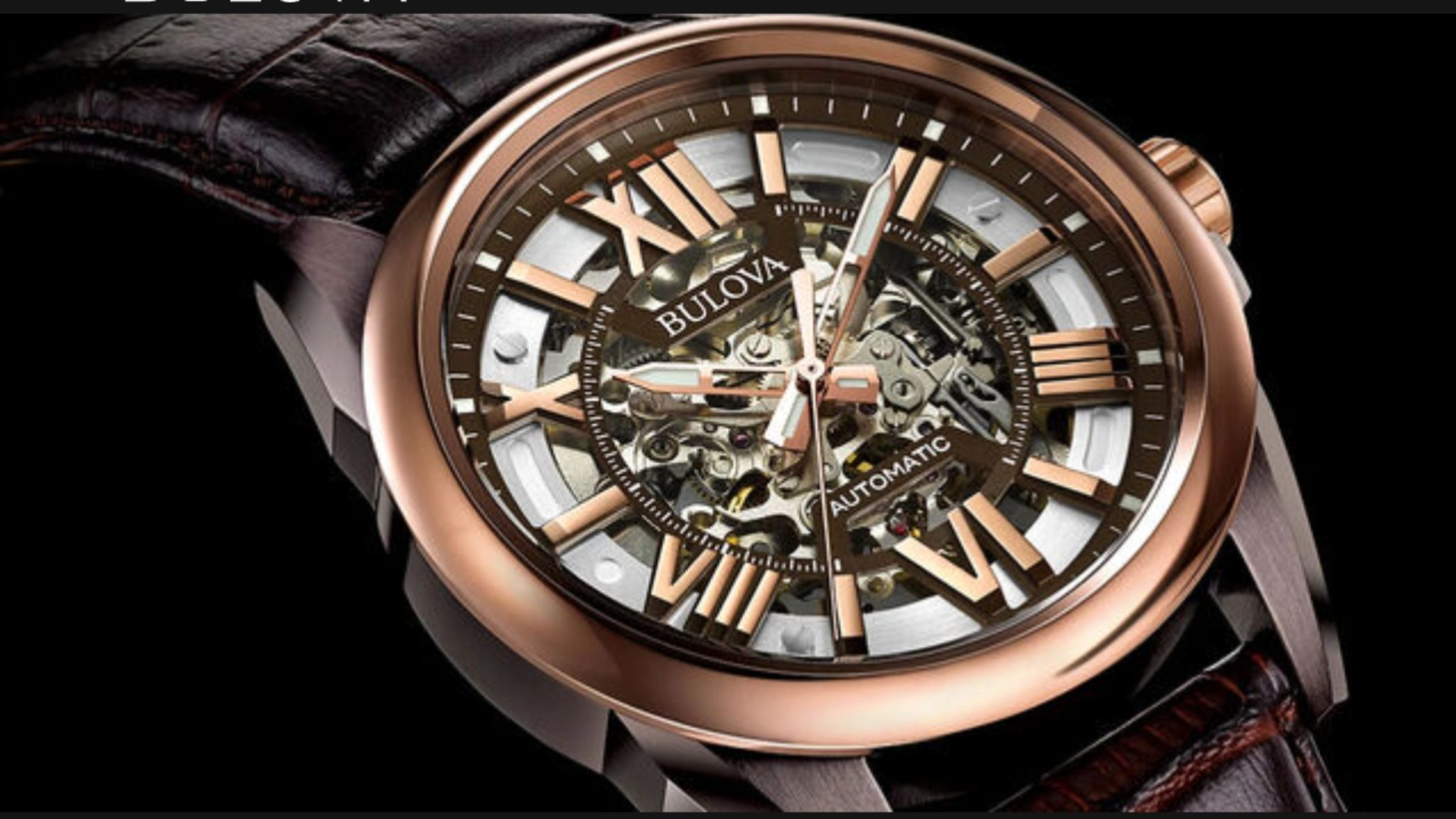
Bulova has been making watches for more than 140 years. They're built to last, but even a well-made timepiece will show signs of wear over time. Regular use, environmental exposure, and aging components all take a toll.
Most of the Bulovas that come across our bench weren't dropped or abused. They were simply worn, day after day, for years, and the small warning signs that showed up along the way went unnoticed until the watch stopped running entirely. That's usually the more expensive outcome. A watch that's diagnosed early is often a $35 fix. The same issue ignored for a year can turn into a full movement overhaul.
Spotting problems early matters, and it's easier than most people think once you know what to look, listen, and feel for. Here's a closer look at the five signs we see most often, what's actually happening inside the case, and when it's worth bringing your watch in.
Quartz vs. Mechanical: Different Watches, Different Warning Signs
The first thing worth knowing is that what's actually wrong depends heavily on which type of movement is inside your case.
Quartz Movements
A weak or dying battery is the most common cause of erratic timing. Corroded contacts and leaking old batteries can also damage surrounding components.
Mechanical Movements
Dried lubricants, worn components, and magnetization from phones or magnetic clasps are the usual culprits. Demagnetizing is often a quick, inexpensive fix.
1. Inaccurate Timekeeping
The most basic job of any watch is to keep accurate time, so it's usually the first thing people notice. If your Bulova is running fast, slow, or stopping without explanation, that's a clear signal something is wrong, even if the watch still looks and feels fine on the wrist.
Accuracy tolerances vary by movement type, and it helps to know what's normal before deciding what's not. Most Bulova quartz watches should stay within about 15 seconds a month. Standard mechanical models typically run within 20 to 30 seconds a day, which sounds like a lot until you remember that's a full day's drift. If you own a Bulova Precisionist, the tolerance is far tighter, often within 10 seconds a year, so even a small deviation is worth investigating on those models specifically.
For quartz models, a weak or dying battery is by far the most common cause. As the battery drains, the movement can't maintain consistent power output, and that shows up as erratic timekeeping before the watch stops altogether. It's worth checking when the battery was last replaced before assuming anything more serious is going on.
For mechanical models, the usual culprits are dried lubricants, worn components, or magnetization. This last one surprises people: everyday items like smartphones, tablet covers, and magnetic bag clasps can magnetize a movement over time, disrupting the balance wheel and escapement in ways that mimic more serious damage. The good news is that demagnetizing is quick and inexpensive, often just a few minutes on the right equipment. If that's ruled out and the timing issue persists, a full service is likely the next step.
2. Water Damage or Fogging
Moisture inside the case is, in our experience, the single most damaging thing that can happen to a watch, and it's also one of the easiest to catch early if you're paying attention. If you see condensation under the crystal, foggy glass that won't clear on its own, or faint water spots through a transparent case back, treat it as urgent rather than cosmetic.
Water ingress corrodes metal components, stains the dial, and, given enough time, damages the movement itself. The longer moisture sits inside a sealed case, the worse and more expensive the eventual repair becomes. We've seen watches that came in a week after the fogging appeared and needed nothing more than a battery and a fresh gasket. We've also seen ones that sat for months and needed a full movement rebuild.
Sometimes the damage isn't visible at all. If your watch was splashed or submerged and then started running erratically, or stopped altogether, moisture may already be inside even without any fogging you can see. That's part of why we treat "it got wet" as reason enough to bring a watch in, regardless of how it looks.
Water resistance ratings are tested under controlled, factory-fresh conditions, and they degrade over time as gaskets and seals dry out, crack, and lose effectiveness, especially with heat exposure. Hot showers, saunas, and hot tubs are particularly hard on seals, since the rapid temperature swings cause them to expand and contract repeatedly. Even a watch rated for real water resistance is worth testing periodically if you wear it anywhere near water.
3. Power Reserve Issues
Automatic Bulova watches wind through the natural movement of your wrist and store that energy in the mainspring. Quartz models simply run on battery power. When either type stops holding a charge the way it should, there's an underlying cause worth chasing down rather than living with.
A healthy automatic Bulova typically offers somewhere between 38 and 48 hours of power reserve when fully wound, though the exact number varies by model. Quartz models should run reliably right up until the battery is nearly depleted. Many Bulova quartz movements will actually tell you this is happening: the second hand starts moving in four-second jumps instead of a smooth one-second tick, a built-in low-battery signal on many, though not all, of their models.
In automatic watches, a worn or loose rotor is a common cause of reduced reserve. If the weighted rotor that spins with your wrist isn't engaging the winding mechanism properly, the mainspring simply never stores enough energy, and the watch runs down faster than it should even with regular wear. In quartz models, a depleted battery is the obvious first check, but corroded battery contacts or a failing electronic module can also interrupt power delivery. Batteries left in too long sometimes leak, and that corrosion tends to spread to surrounding components, turning a $30 fix into something considerably more involved.
As a rule of thumb, we recommend replacing a quartz Bulova's battery every one to two years rather than waiting for the watch to stop completely. If you own a Bulova solar or light-powered model, none of this applies in quite the same way, since those charge from ambient light and have different maintenance needs entirely.
4. Physical Damage or Loose Parts
Not all physical damage is equally urgent, and it's worth knowing the difference between what's purely cosmetic and what actually needs attention right away.
Urgent issues include a cracked or chipped crystal, a loose or stiff crown, loose hands rattling inside the dial, or any visible gap in the case back. Each of these compromises the watch's ability to keep out water, dust, and debris, and left alone, they tend to lead to movement damage down the line. Non-urgent, purely cosmetic issues, like surface scratches on the case or bracelet, don't affect how the watch runs. A skilled watchmaker can polish those out, but there's no rush.
A simple visual check goes a long way. Look for chips or cracks in the crystal, dents in the case, and any play in the crown when it's pushed all the way in. Give the watch a gentle shake and listen for rattling, which can signal a loose hand, a detached component, or debris that's found its way inside. Check the case back for gaps too, especially if the watch has been dropped or knocked against something hard recently.
For most Bulova models, repairing physical damage is worth the cost, particularly for pieces with sentimental or collector value. Crystal replacement in particular is often more affordable than people expect, and it restores both function and appearance in one visit.
5. Unusual Noises or Grinding Sounds
Mechanical watches make noise, and that's normal. The steady tick of an escapement and the soft, faint spin of an automatic rotor are both part of how the watch is supposed to sound. What isn't normal is grinding, scraping, or a harsh rattle that wasn't there before.
These sounds usually mean metal parts are contacting each other in ways they shouldn't, or that debris has found its way into the movement. Left alone, this kind of wear compounds quickly and can cause damage that's difficult, or impossible, to reverse.
Dried or degraded lubricant is the most common cause. Watch oils break down over years of use, and once they lose their protective properties, friction between moving parts increases. You might notice this first as a subtle grinding or roughness in the winding action, well before it becomes a sound you can hear without holding the watch to your ear. Debris is the other common cause, dust, lint, and tiny metal particles accumulating inside the movement over time and interfering with the escapement, especially in older watches that haven't been serviced in many years.
If you hear grinding or scraping, our advice is simple: stop wearing the watch immediately. Continued use risks turning a fixable problem into permanent damage. Bring it in for a diagnosis as soon as you reasonably can.
The 5 Signs at a Glance
If you're skimming rather than reading start to finish, here's the short version of everything above.
| Sign | What You'll Notice | What to Do |
|---|---|---|
| Inaccurate Timekeeping | Runs fast, slow, or stops intermittently | Check battery or wind level; see a watchmaker if unresolved |
| Water Damage or Fogging | Condensation under crystal, rust, or discoloration | Seek professional inspection immediately |
| Power Reserve Issues | Watch stops prematurely or drains too fast | Replace battery or service winding mechanism |
| Physical Damage or Loose Parts | Cracked crystal, loose crown, rattling sounds | Have a watchmaker assess urgency and repair |
| Unusual Noises or Grinding | Grinding, scraping, or rattling from inside | Stop wearing and take to a repair center right away |
"A dead battery left in the case doesn't just stop the watch, it can leak and cause corrosion that costs far more to fix than a routine swap."
— It's About Time Workshop Team
How Urgent Is Each Sign?
Not every symptom means drop everything, but a few genuinely can't wait.
Check the battery age first. If timing drifts persist after a fresh battery, it's worth a bench visit.
Moisture inside the case corrodes components fast. The longer it sits, the more expensive the repair.
A worn rotor or aging battery rarely fails overnight, but it won't fix itself either.
These compromise the seal against water, dust, and debris. Surface scratches, by contrast, are purely cosmetic.
Metal contacting metal inside the movement. Stop wearing it immediately and bring it in.
What Happens During a Repair Assessment?
The process is methodical and typically takes only a few minutes once your watch is with the technician, but each step serves a specific purpose.
The case and crystal are checked for cracks, fogging, or damage that could hint at what's wrong before it's even opened.
The movement is measured against a calibrated reference to see how far off it's actually running.
If fogging or moisture is suspected, a pressure test confirms whether the seals are still doing their job.
The case is opened under magnification to check for worn lubricant, magnetization, or physical wear.
You'll get a written estimate before any work begins, and nothing proceeds without your sign-off.
Get our monthly watch care guides and service reminders. No spam, unsubscribe anytime.
What Happens if You Ignore These Signs?
The short answer: moisture, wear, and dried lubricant don't get better on their own, they compound. A watch is a closed environment, and once something is wrong inside it, it tends to stay wrong until someone opens the case and fixes it.
A small amount of water inside the case can cause corrosion on the movement parts, rust on the mainspring, and staining on the dial that's often impossible to fully reverse. The condensation you see under the crystal today is frequently just the visible tip of a problem that's already a full movement service away from being a simple fix. The same is true of grinding sounds: what starts as dried lubricant on one pivot can, over months of continued wear, scar a jewel or bend a delicate part that would have cost nothing to avoid.
None of this is meant to be alarming. Watches are remarkably forgiving machines, and almost everything on this list is fixable, often for less than people expect. The point is simply that time works against you here in a way it doesn't with most other things you own.
⚠ The cost comparison: A pre-emptive battery swap or gasket replacement typically runs $35–$65. A movement damaged by unresolved water exposure can run $200–$500 or more, depending on how long the moisture sat inside.
Frequently Asked Questions
How often should I service my Bulova watch?+
Mechanical Bulova watches generally benefit from a full service every 3 to 5 years, including cleaning, fresh lubrication, and movement adjustment. Quartz models need less frequent attention but should have the battery replaced every 1 to 2 years.
Does a battery replacement void my watch's water resistance?+
Not on its own, but opening the case does reset your water resistance to unknown until it's pressure tested again. That's why a proper battery service always includes a fresh gasket and a test.
Can I repair my Bulova watch at home?+
Basic tasks like swapping a leather strap or cleaning the case exterior are fine at home. Anything involving the movement, crystal, crown, or case seals should go to a professional.
How much does Bulova watch repair cost?+
A battery replacement typically runs $20 to $50. Crystal replacement and seal work generally fall in the $75 to $150 range. A complete movement overhaul can range from $200 to $500 or more depending on complexity.
What happens if my watch fails a pressure test?+
A failed test usually means a worn gasket or seal, an easy and inexpensive fix if caught early. We'll always quote replacement before doing any work, and check for internal moisture at the same time.
Where to Get a Bulova Watch Repaired
Not every jeweler or watch shop has the right equipment. A proper diagnosis requires a calibrated timing machine, and the results are only meaningful if the technician knows how to interpret them and replace gaskets correctly.
Your best options are an authorized service center for your brand, or a qualified independent watchmaker. When you call ahead, ask two things: whether they perform testing as part of a battery or service visit, and whether they replace gaskets at the same time. If the answer to either is no, it's worth finding a shop that does.
At It's About Time, pressure testing is part of how we approach any service that involves opening the case. It's never an add-on, it's just the right way to do the job. Whether it's a $35 battery swap or a full mechanical overhaul, you'll get a written estimate before we touch anything, and you'll get a real explanation of what we found and why. Come visit us in Johns Creek or call to speak with a certified watchmaker.