
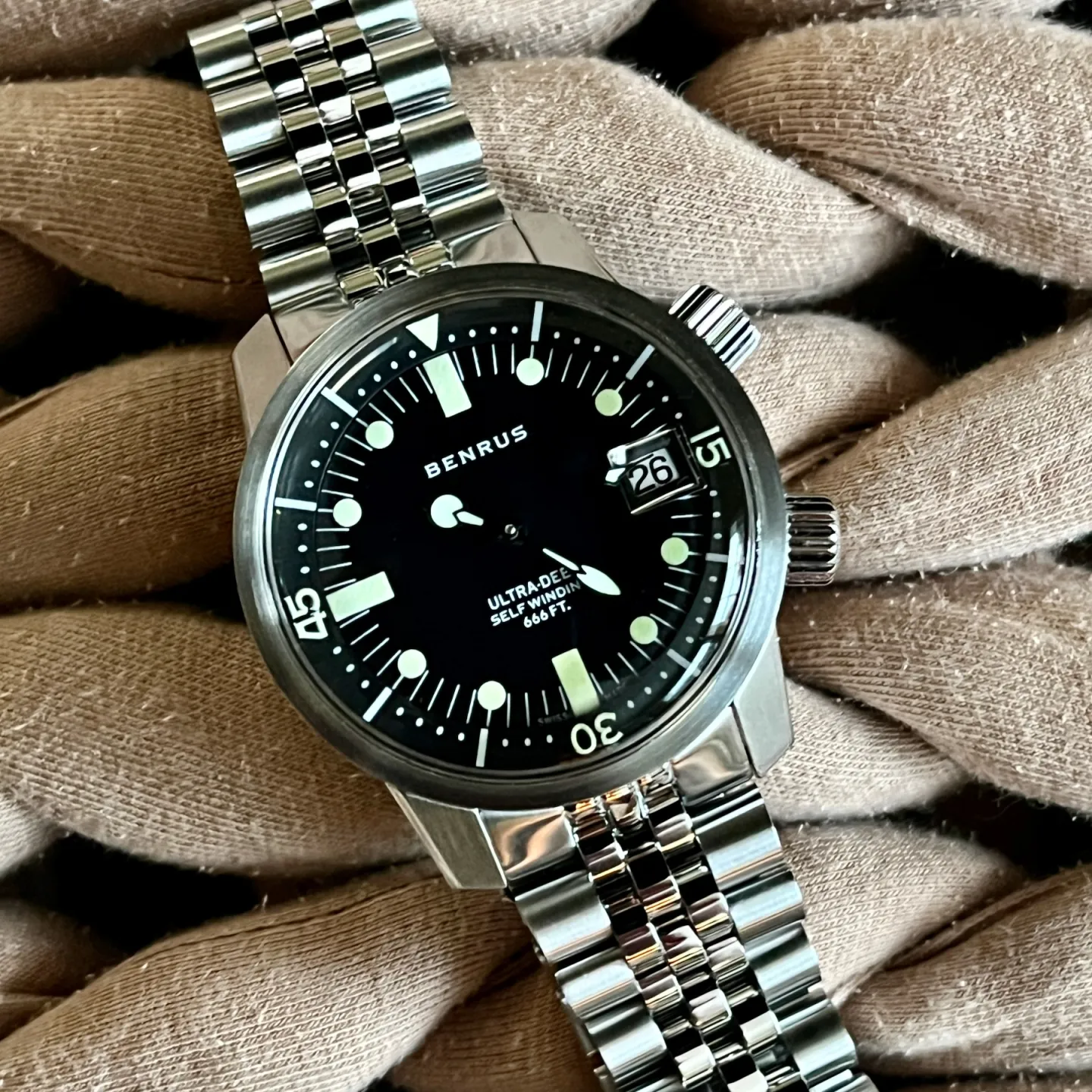
Benrus is one of those names that carries a certain weight among watch collectors. For some, it recalls a childhood watch handed down through a family. For others, it evokes the black-dialed field and dive watches that saw service on the wrists of American soldiers. Whichever way you first encounter the brand, the same thing tends to happen: what starts as passing curiosity turns into a genuine appreciation for the craft.
Yet for all its history, Benrus is easy to misunderstand. It sits in the sweet spot between disposable fashion watches and untouchable luxury, which is exactly why it rewards a closer look. This is a guide to where the brand came from, why its watches matter, and what to know before you buy, collect, or restore one.
A Century of Benrus: A Journey Through Time
The Benrus story begins in 1921, when Benjamin Lazrus founded the company in New York City. Like many watch firms of the era, it started small, assembling and casing movements sourced largely from Switzerland. What set Benrus apart was ambition. Within a few decades it had grown from a modest operation into one of the most recognizable watch brands in the United States.
The Rise to Prominence
By the 1950s, Benrus had earned a place among the best-selling watch brands in America, competing directly with names like Bulova, Elgin, and Hamilton. Much of that success came from a clear-eyed understanding of its audience: well-made, attractive watches priced within reach of ordinary buyers. Benrus was never trying to be the most expensive watch on the wrist — it aimed to be the most watch for the money, and for a long stretch it delivered exactly that.
Innovation and Patents
Benrus was not content simply to case other people's movements. Over the years the company filed a steady stream of patents with the U.S. Patent and Trademark Office, covering everything from case construction to movement refinements. That willingness to invest in engineering, rather than just marketing, is a large part of why vintage Benrus pieces still feel considered and well-built decades later.
Benrus in the Military: Watches That Served
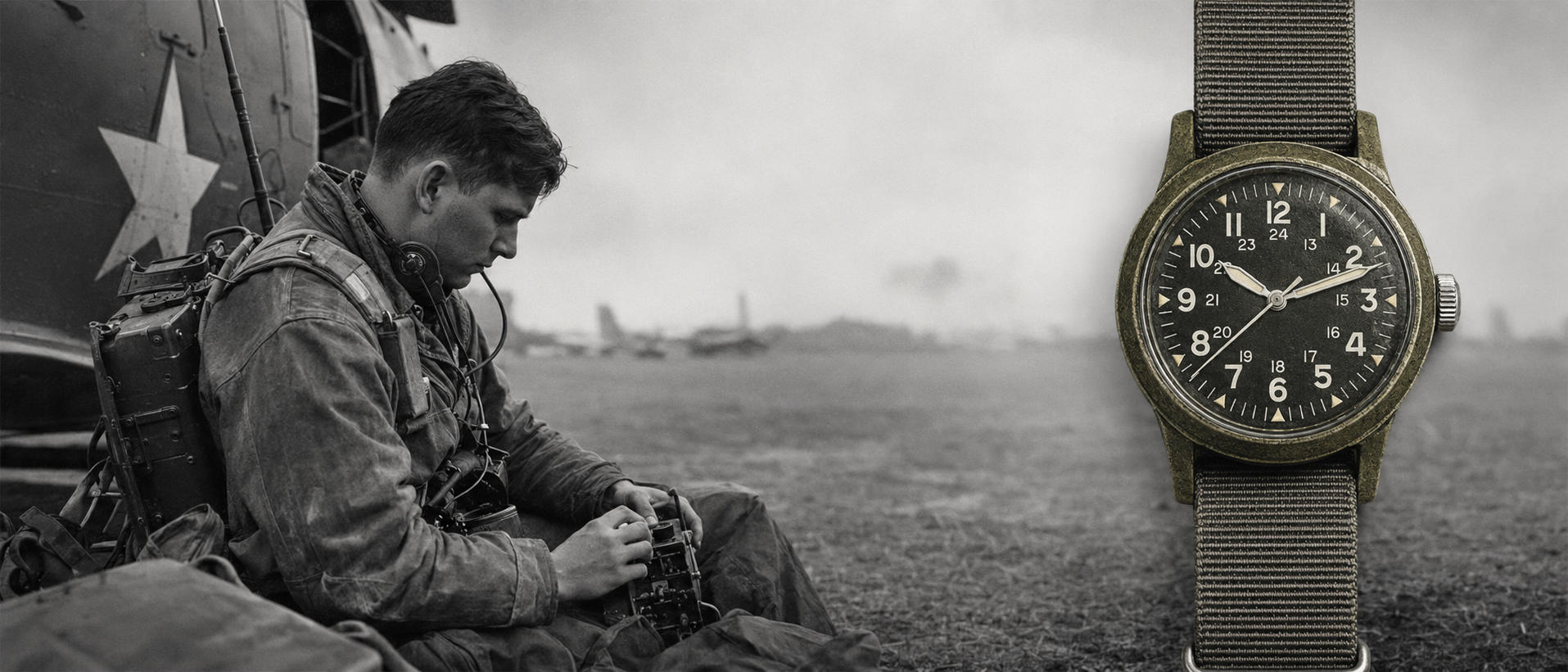
If there is one corner of Benrus history that matters most to collectors today, it is the military chapter. Benrus supplied timepieces to the U.S. armed forces across multiple generations of service, from the Second World War through Vietnam. These weren't dress watches. They were tools, built to a government specification and expected to survive conditions that would end an ordinary watch.
Military Contracts and Specifications
Benrus military watches were produced against strict U.S. military specifications — documents like MIL-W-3818 for field watches and MIL-W-50717 for the asymmetric-cased dive watches. These specifications dictated everything from case construction and legibility to luminous material and shock resistance. The result is a level of consistency and ruggedness that makes surviving examples genuinely collectible.
Authenticating Military Models
Authenticity is everything with military Benrus, and the details are what separate a real piece from a reproduction or a "franken" watch assembled from mismatched parts. Case-back engravings, contract stamps, and the MIL-spec designation are the first things to check, and they should be consistent with each other and with the model's known production window.
- Cross-check case-back contract numbers and inspection stamps.
- Verify dial, hands, and lume against documented references.
- Confirm the movement is the correct caliber for the model and period.
- Cross-reference the MIL-spec designation against the known production range.
If a seller can't speak to these details, or hasn't documented them, treat that as a reason to slow down, not an outright deal-breaker. Even a genuine military Benrus is worth verifying before money changes hands.
Collecting Vintage Benrus: A Guide for Enthusiasts
The vintage watch market rewards patience and knowledge, and Benrus is no exception. Because the brand sits below the luxury tier, it is often possible to acquire a genuinely interesting piece of watchmaking history for a fraction of what a comparable "name" brand would cost — provided you know what you're looking at.
Model Identification and Valuation
Identifying a specific Benrus model begins with the case back. Most examples carry a model reference number stamped inside, which can be matched against collector catalogs and online databases. From there, design, case shape, dial layout, and movement caliber all help narrow down exactly what you're holding. Valuation follows condition and originality: an all-original, unpolished example with its correct dial and movement will always command more than a restored or modified one.
Common Pitfalls When Buying Vintage
The vintage market can be unforgiving to the impatient buyer. Most of the common regrets we hear come down to the same handful of avoidable mistakes, so it's worth keeping them in mind before you commit.
⚠ Common Pitfalls to Avoid
- Buying without verifying the watch is in working condition.
- Overlooking signs of a botched or non-original replacement part.
- Trusting online seller descriptions without independent verification.
- Overpaying for a rare-looking piece that hasn't been inspected.
- Skipping a second-opinion assessment by a qualified watchmaker.
Thinking of buying vintage?
Bring a piece to the bench, or send photos ahead, and a certified watchmaker will check originality, condition, and movement before you commit.
Modern Benrus: Bridging Heritage and Innovation
The Benrus name went quiet in the mid-1970s, but the story didn't end there. In more recent years the brand has been revived, with the trademark changing hands and new custodians working to reintroduce it to a contemporary audience. Understanding what the revived brand represents, and how it differs from the vintage pieces, matters if you're deciding between the two.
New Models and Their Appeal
Contemporary Benrus watches are designed to appeal to buyers who appreciate the brand's story but want a modern, warrantied watch on the wrist. The new models typically lean into Benrus's most recognizable heritage designs — the asymmetric-cased dive watch above all — while updating materials, water resistance, and reliability for present-day wear.
✓ Potential Advantages of Modern Benrus
- A brand-new watch with full manufacturer warranty and no restoration risk.
- Modern reliability, improved water resistance, and updated materials.
- Heritage-inspired design without the fragility of a decades-old movement.
- Readily available to buy new, rather than hunted down on the vintage market.
- A lower barrier to entry into the Benrus name for first-time buyers.
Challenges and Opportunities
A revived brand always faces the same balancing act: honoring its history without pretending to be something it isn't. For collectors, the modern watches will never carry the provenance of a period military piece, and that's simply the nature of a relaunched marque. But for the buyer who wants the look and spirit of a Benrus without the risks of vintage ownership, the current offerings fill a real and useful gap. The two eras don't compete so much as serve different buyers at different points on the same journey.
Buying, Servicing, and Caring for a Benrus
Whether you already own a Benrus or are considering one, the practical side matters just as much as the history. Vintage examples in particular need a watchmaker who understands older, often American, movements and can source or fabricate parts that are no longer manufactured. A routine service on a healthy vintage Benrus is usually straightforward; a neglected one that has sat unrun for decades can be a larger undertaking.
Our advice is always the same: have any vintage piece assessed before you rely on it, and set a realistic budget for bringing it back to correct running order. A watch that has been properly serviced will not only keep better time, it will protect the value of an increasingly collectible name.
Have Your Benrus Assessed & ServicedFrequently Asked Questions
What is the history of Benrus watches?+
Benrus was founded in 1921 by Benjamin Lazrus in New York City and grew into one of the top American watch brands by the 1950s. The company supplied field and dive watches to the U.S. military through several decades before falling quiet in the mid-1970s. The name has since been revived under new ownership.
Are Benrus watches worth anything today?+
Yes. Everyday vintage models often trade between roughly $300 and $1,500, while original military-issue pieces — especially the Type I and Type II dive watches — can command significantly more at auction. Condition, originality, and provenance drive the value.
How do I identify a vintage Benrus watch model?+
Start with the case back, which usually carries a model reference number you can match against collector catalogs and databases. Dial layout, case shape, and movement caliber help confirm it. When in doubt, a watchmaker experienced with vintage Benrus can identify the piece and flag any non-original parts.
Where can I buy a Benrus watch?+
Vintage Benrus turns up with specialist dealers, at auction, and through online marketplaces. Buy from sellers who document condition and originality. New, warrantied models are available directly from the revived Benrus brand. Either way, an in-person or expert inspection is worth the effort.
What are Benrus military watches, and why are they collectible?+
These are watches Benrus produced against U.S. military specifications for service use, including field watches and the asymmetric-cased Type I and Type II dive watches. Relatively low production, genuine field history, and strict build standards make surviving, original examples highly sought after.
How do I find replacement parts or get a Benrus watch repaired?+
Because many parts are no longer manufactured, vintage Benrus repair calls for a watchmaker experienced with older movements who can source period-correct components or carefully fabricate them. A qualified independent workshop is usually your best option — and the right first step is a diagnostic assessment.
Is getting a Benrus watch repaired going to be expensive?+
It depends entirely on the movement's condition. A routine service on a healthy vintage Benrus is reasonable, while a piece that has sat unrun for years, or needs fabricated parts, costs more. We always provide a written estimate before any work begins, so there are no surprises.
Trust Your Benrus to a Specialist
Not every jeweler is equipped to work on a vintage American movement, and a Benrus — particularly a military model — deserves someone who understands what makes it original and what doesn't. The wrong parts or an over-polished case can quietly erase both character and value.
At It's About Time, we assess, service, and restore vintage pieces the right way: original where possible, honest about what we find, and always with a written estimate before we touch anything. Whether you've just inherited a Benrus, are weighing a purchase, or want a cherished piece brought back to correct running order, come visit us in Johns Creek or call to speak with a certified watchmaker.