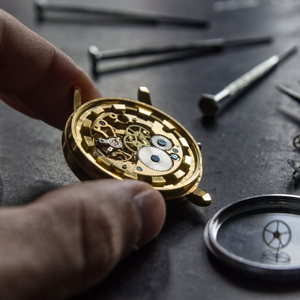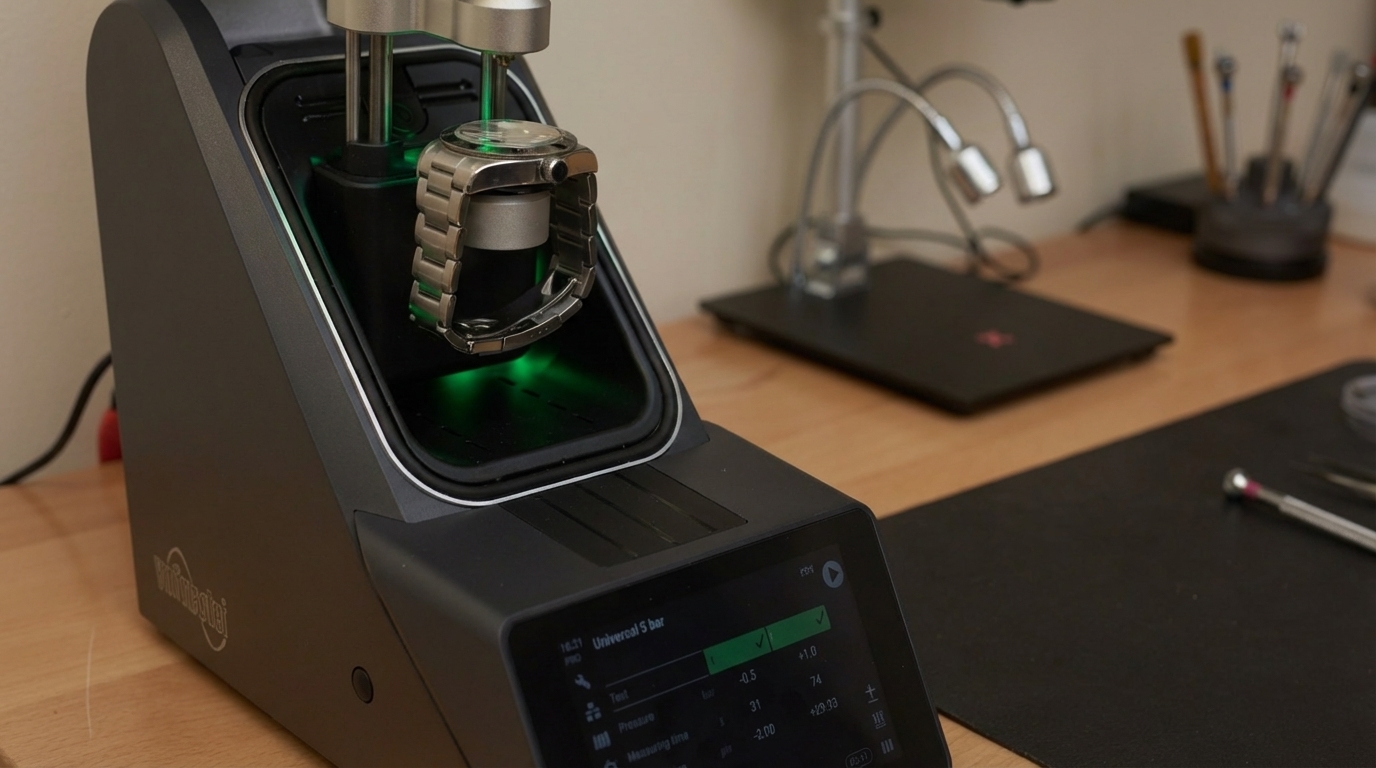
A watch pressure test checks whether the seals that keep water out are still intact. You need one any time a case has been opened, including after a battery replacement, and before relying on a water-resistance rating around water.
For divers, swimmers, and anyone who wears a quality timepiece in damp conditions, this is one of the most important steps in protecting the movement over the long term.
Key Takeaways
- ✓Testing verifies gaskets and seals. It confirms whether the case can still resist water entry.
- ✓Case opening changes the equation. After a battery, crystal, crown, or movement service, the rating is not guaranteed until tested.
- ✓Annual checks are sensible for water use. Divers and regular swimmers should have watches tested at least yearly.
- ✓Skipping the test risks moisture damage. Condensation, corrosion and costly movement repairs can follow.
What Is a Watch Pressure Test?
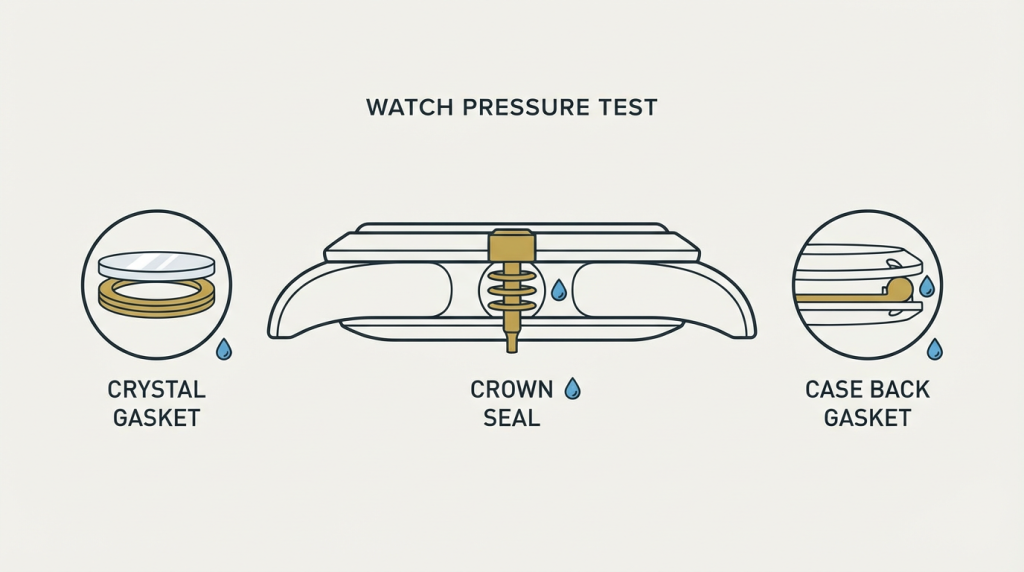
A pressure test checks whether the case, crown, case back and crystal seals are still effective at keeping water out. Rubber or synthetic gaskets can dry out, compress, or be disturbed during service. Specialized equipment applies controlled air pressure or immerses the watch under controlled conditions so a watchmaker can identify a compromised seal before water exposure does.
Dry vs. Wet Pressure Testing
A dry test uses compressed air without getting the watch wet and is appropriate for many everyday water-resistant watches. A wet test submerges the watch under pressure and is closer to real conditions, so it is often used for higher-rated dive watches.
How Water-Resistance Ratings Actually Work
Ratings are determined under laboratory conditions rather than real-world use. More importantly, they describe the watch as it left the factory. Each case opening can disturb a gasket, so the rating becomes unknown until a proper test confirms the seal.
| Rating | Suitable For | Not Suitable For |
|---|---|---|
| 30m / 3 ATM | Splashes and rain | Swimming or showering |
| 50m / 5 ATM | Short shallow swims | Snorkeling or diving |
| 100m / 10 ATM | Swimming and snorkeling | Scuba diving |
| 200m+ / 20 ATM+ | Scuba and recreational diving | Saturation diving |
When Do You Need a Pressure Test?
- After a battery replacement: Case-back opening disturbs the gasket every time.
- After any case opening or service: Crystal, crown, movement, or case-back work should be followed by a test.
- After an impact or drop: A hard knock can shift or crack a gasket without visible external damage.
- After crown damage: The crown is a common entry point for moisture.
- Every year for divers and swimmers: Seals naturally degrade over time.
Failure to verify seals can lead to condensation under the crystal, corrosion and dial damage. If you need service but are not local, see how to ship a watch securely for repair.
What Happens During Testing?
- The watchmaker visually inspects the crown and case back.
- The watch is placed in a calibrated pressure-testing machine.
- For a dry test, controlled air pressure is held for a set period.
- For a wet test, the watch is submerged and monitored under pressure.
- The result determines whether gasket work or other repair is needed.
What a Failed Test Reveals
A failed test means the problem was found before water caused more serious damage. Common causes are worn or dried gaskets, an improperly seated case back, or a compromised crown seal. A qualified workshop can identify the cause, replace appropriate seals, and retest the watch.
For high-value watches, where service standards affect both function and ownership value, read our guide to choosing the right Rolex service provider.
Frequently Asked Questions
Does a Pressure Test Need an Authorized Service Center?
Not necessarily, but the technician must have appropriate calibrated equipment and know how to act on the result.
Can Any Watch Be Pressure Tested?
Most watches with water-resistance ratings can be tested. Very low-rated dress watches are sometimes excluded.
How Often Should I Test a Dive Watch?
Once a year is a common recommendation for watches worn regularly in water.
Does a Pressure Test Include the Crown?
Yes. The crown and sealing tube are evaluated along with the rest of the case.