

Quick Answer: The top 10 luxury watch brands in 2026 are Rolex, Patek Philippe, Audemars Piguet, Omega, Cartier, TAG Heuer, Jaeger-LeCoultre, Hublot, IWC Schaffhausen, and Breitling. Each brand is recognized for exceptional craftsmanship, long-term value, and a distinct identity that makes them worth owning, collecting, and gifting.
Why Luxury Watches Still Matter in 2026
A great watch does more than tell time. For collectors, each piece represents a chapter in horological history. For gift buyers, the right watch marks a milestone in a way that few other objects can. And for both groups, the question of which brand to trust is one that deserves a real answer.
In 2026, the leading Swiss watchmakers are navigating a fascinating tension. Heritage houses are doubling down on traditional hand-finishing and mechanical complexity, while also responding to modern expectations around materials, sustainability, and wearability. The result is a market where investment-grade timepieces and genuinely wearable daily watches often come from the same brand, and sometimes the same reference.
Whether you are building a collection from scratch or searching for a meaningful gift, this guide covers everything you need to know about the top names in the industry, what separates them, and how to choose wisely.
Are Luxury Watches Worth Buying in 2026?
For many buyers, the answer is yes, but the reasons vary. Some purchase for passion. Others buy with one eye on the secondary market. Most fall somewhere in between.
The stronger case for buying now is rooted in what the best brands have always delivered: mechanical artistry that holds its relevance regardless of what technology is doing elsewhere. A well-chosen watch from a respected manufacturer does not become obsolete. It ages, and in many cases, it appreciates.
That said, not every watch increases in value. The secondary market rewards specific brands, references, and conditions. Broadly speaking, collectors should focus on:
- Brand prestige and consistent demand over time
- Iconic references with proven auction and resale history
- Rarity and originality, including limited editions and discontinued models
- Condition and documentation, including box, papers, and service records
Rolex and Patek Philippe have the most consistent track records for value retention. A stainless steel Rolex Submariner, for example, has outperformed most traditional asset classes over the past two decades on the secondary market. A Patek Philippe 5711 in steel sold for multiples of its retail price at auction before it was discontinued in 2021, and demand for surviving examples has not softened.
Beyond those two, select references from Audemars Piguet, Omega, and Jaeger-LeCoultre have also shown strong long-term demand among serious collectors.
If you are still early in your collecting journey, our luxury watch collecting guide for beginners is a practical place to start before committing to a purchase.
The Top 10 Luxury Watch Brands in 2026
Each brand on this list earns its place for different reasons. The entries below are written to help collectors and gift buyers understand what makes each one distinct, not just what makes them expensive.
1. Rolex: The Reference Point for the Entire Industry
Starting price: Approx. $6,000 (new, steel sports models often above $10,000)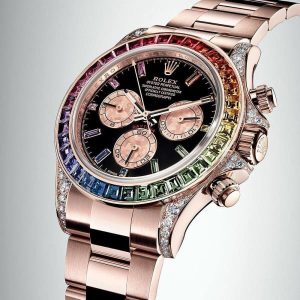
Best known for: Submariner, Daytona, GMT-Master II, Datejust
Best suited for: First serious watch buyers, daily wear collectors, value-focused buyers
Rolex is the brand that almost every other watchmaker is measured against. That is not an accident. Rolex has spent decades refining a relatively focused catalog to near-perfection, building in-house movements, cases, bracelets, and dials under one roof with a consistency that is genuinely difficult to match.
The Oyster Perpetual case construction, developed in the 1920s, remains the foundation of virtually every Rolex sports model. The Submariner is arguably the most copied watch design in history. The Daytona has a waiting list measured in years at authorized dealers. None of that happens without a product that earns it.
For collectors, Rolex’s key advantage is liquidity. A well-maintained Rolex is one of the easiest luxury watches to sell if you ever choose to. That combination of wearability, reliability, and resale confidence is why Rolex remains the default first serious purchase for most collectors.
For gift buyers: a steel sports Rolex is one of the safest, most universally appreciated luxury gifts in this category.
Ownership tip: Understanding your service options matters before you buy. Our guide on how to find a Rolex service center near you covers what to expect and how to plan for long-term maintenance.
2. Patek Philippe: The Collector’s Benchmark
Starting price: Approx. $20,000 (entry-level dress references)
Best known for: Calatrava, Nautilus, Aquanaut, Grand Complications
Best suited for: Serious collectors, legacy buyers, heirloom gift givers
Patek Philippe operates at a different level of prestige than almost any other watchmaker. It is family-owned, produces a carefully limited number of watches each year, and has built a catalog of complications that represent some of the most technically demanding work in the industry.
The brand’s perpetual calendars, minute repeaters, and split-seconds chronographs are benchmarks for fine watchmaking. Even its simpler dress pieces carry an understated authority that resonates with collectors who know what they are looking at.
On the secondary market, Patek Philippe consistently sets auction records. The 5711 Nautilus in steel, discontinued in 2021, trades well above its original retail price. Grand Complications from past decades routinely achieve significant multiples at auction. For a buyer whose primary concern is the long-term value of a timepiece, Patek Philippe is the most defensible choice on this list.
For gift buyers: this is the watch to give when the occasion demands something genuinely significant. A Calatrava or a classic Nautilus communicates care and knowledge in equal measure.
3. Audemars Piguet: The Watch That Changed the Luxury Sports Category
Starting price: Approx. $25,000 (Royal Oak steel)
Best known for: Royal Oak, Royal Oak Offshore, Royal Oak Concept
Best suited for: Design-forward collectors, sports watch enthusiasts, bold gift givers
In 1972, Gerald Genta designed the Royal Oak on a napkin overnight. The result was a watch with an octagonal bezel, exposed screws, and an integrated bracelet, priced higher than any stainless steel watch had ever been. It was controversial. It became iconic.
The Royal Oak is now the defining luxury sports watch of the modern era, and Audemars Piguet has built an entire brand identity around it. In 2026, the Royal Oak and its larger sibling, the Royal Oak Offshore, remain among the most coveted references on the secondary market. Select limited editions, particularly those in ceramic or titanium with unusual dial configurations, trade at significant premiums.
AP’s technical credentials are equally strong. The manufacturer produces its own high-complication movements, including tourbillons, perpetual calendars, and minute repeaters, often housed in cases that push material science as hard as they push horology.
For gift buyers: if the recipient already owns a Rolex and wants something architecturally bolder, an Audemars Piguet is the natural next step.
4. Omega: Serious Watchmaking at a More Accessible Entry Point
Starting price: Approx. $4,000 (Seamaster and Constellation entry references)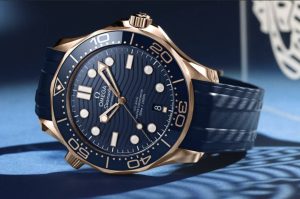
Best known for: Speedmaster Professional, Seamaster 300M, De Ville Tresor
Best suited for: History-minded collectors, sport and dive watch buyers, first-time luxury buyers
Omega occupies an interesting position in the market. It carries genuine horological credibility, including a long history in space exploration and Olympic timekeeping, while remaining more accessible than many of the brands above it on this list.
The Speedmaster Professional, worn by NASA astronauts during the Apollo missions, is one of the most historically significant watches ever made. The Seamaster 300M, made famous by James Bond, is a legitimate professional dive instrument as well as a cultural touchstone. Both have active collector communities and strong secondary market interest.
What sets Omega apart technically is its Co-Axial escapement and Master Chronometer certification, a testing standard administered by METAS that goes beyond the standard COSC chronometer test. In practical terms, this means better long-term accuracy and enhanced magnetic resistance, which matters for daily wear.
Omega’s service intervals are typically around five years, though this varies by reference and usage. Our guide on how often an Omega should be serviced explains what to expect and how to plan accordingly.
5. Cartier: Where Fine Jewelry Meets Fine Watchmaking
Starting price: Approx. $3,500 (Santos entry references)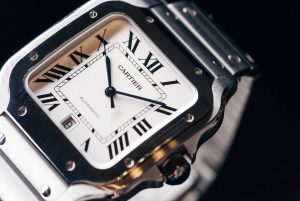
Best known for: Tank, Santos, Ballon Bleu, Panthère, Rotonde
Best suited for: Dress watch collectors, design-focused buyers, elegant gift givers
Cartier is the only brand on this list that came to watchmaking through jewelry, and that background shows in everything it produces. The Tank, designed in 1917 and inspired by the top-down view of a military tank, remains one of the most elegant rectangular watches ever made. The Santos, originally created for Brazilian aviator Alberto Santos-Dumont in 1904, is considered one of the first purpose-built pilot’s watches.
These are watches designed by people who think about objects as art. The dials feature Roman numerals, the cases are architectural in proportion, and the overall impression is one of considered restraint.
Cartier watches are not primarily about mechanical complexity, though the brand does produce its own movements. They are about design authority and wearing something that feels like a finished object rather than a technical instrument. For gift buyers, a Cartier is often the most immediately recognizable choice on this list, and recognition matters when a watch is given to someone outside the collector community.
For owners: the Ballon Bleu’s distinctive crown guard and case shape require specialist knowledge during servicing. Our overview of common Cartier watch problems and when to seek professional repair is worth reading before your first service.
6. TAG Heuer: The Motorsport Manufacture
Starting price: Approx. $2,000 (Formula 1 and Carrera entry references)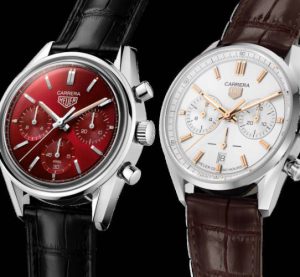
Best known for: Carrera, Monaco, Formula 1, Autavia
Best suited for: Motorsport enthusiasts, chronograph collectors, sport-focused buyers
TAG Heuer’s identity is built around speed, precision, and the racetrack. The Monaco, a square-cased chronograph made famous by Steve McQueen in the 1971 film Le Mans, is one of the most recognizable watch designs ever produced. The Carrera, originally named after the Carrera Panamericana road race, is a cleaner, more collector-friendly take on the racing chronograph.
In 2026, TAG Heuer continues to invest in its Manufacture Calibre movements, bringing more in-house production to a brand that previously relied heavily on ébauche suppliers. The brand also operates its Connected smartwatch line, a fully separate product from its mechanical catalog, appealing to a different type of buyer entirely.
Within the collector community, vintage TAG Heuers, particularly early Monaco and Carrera references from the 1960s and 1970s, are highly sought after and command serious premiums. Modern references are more accessible entry points into Swiss watchmaking for buyers who are drawn to the sport aesthetic.
When your TAG Heuer needs professional attention, our authorized TAG Heuer repair guide explains what qualified service involves and what to look for in a watchmaker.
7. Jaeger-LeCoultre: The Manufacture’s Manufacture
Starting price: Approx. $5,000 (Reverso entry, Master Control)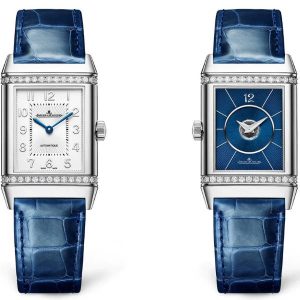
Best known for: Reverso, Master Control, Polaris, Atmos clock
Best suited for: Complication-focused collectors, connoisseur buyers, understated gift givers
Jaeger-LeCoultre holds a unique position in the Swiss watch industry. The Le Sentier manufacture has produced over 1,200 calibers since its founding in 1833, more than any other watchmaker. It has historically supplied movements and components to many of the other prestigious brands on this list, though today it operates entirely as a full manufacturer in its own right.
The Reverso, designed in 1931 so polo players could flip their watch face to protect the crystal during play, is one of the most architecturally distinctive watches ever made. The reversible case also became a canvas for miniature enamel paintings and skeletonized dials. The Master Ultra Thin and its variants represent some of the thinnest mechanical movements in production.
Among collectors, Jaeger-LeCoultre is often described as a connoisseur’s choice: a brand that rewards knowledge. People who understand what it takes to produce a minute repeater or a perpetual calendar at this level of finishing recognize the value in a way that casual observers may not. That insider quality is part of its appeal.
8. Hublot: Materials Science as Watchmaking Philosophy
Starting price: Approx. $6,000 (Classic Fusion entry references)
Best known for: Big Bang, Classic Fusion, Spirit of Big Bang
Best suited for: Bold collectors, contemporary design buyers, sports and collaboration enthusiasts
Hublot entered the luxury watch market in 1980 with a then-unusual idea: pairing a gold case with a rubber strap. The Art of Fusion philosophy that emerged from that decision now defines everything the brand makes. In 2026, Hublot produces cases in materials that other watchmakers rarely attempt, including Magic Gold (a scratch-resistant gold alloy), full sapphire crystal cases, and a range of composite and carbon fiber constructions.
It is worth being clear about who Hublot is for. This is not a brand for buyers who prefer understated elegance. The Big Bang is large, bold, and visually complex. Hublot’s collaborations with football clubs, artists, and luxury fashion brands produce limited editions that are as much collectible objects as they are watches. Some serious complication pieces sit within the lineup, including tourbillons and chronographs of genuine technical merit, but the brand’s primary appeal is visual and contemporary.
For collectors who already own pieces from Rolex, Omega, or Patek Philippe, a Hublot often serves as a deliberate contrast: the watch you wear when you want to be noticed.
9. IWC Schaffhausen: Engineering With Purpose
Starting price: Approx. $4,000 (Pilot’s Watch Mark XX)
Best known for: Pilot’s Watches, Portugieser, Portofino, Aquatimer
Best suited for: Aviation history enthusiasts, tool watch collectors, clean-dial buyers
IWC Schaffhausen, founded in 1868 in the Swiss town of Schaffhausen, has always positioned itself around engineering and purposeful design rather than decoration. The Pilot’s Watch line, drawing on IWC’s long relationship with aviation timing, produces some of the most legible and functional dials in the luxury category. The Portugieser, originally built to house a pocket watch movement, has a large, clean dial and a thin profile that makes it one of the most versatile dress watches in the modern catalog.
IWC produces its own in-house movements, including the Pellaton winding system and a range of calendar and chronograph calibers. Case sizes at IWC tend to run larger than average, which suits buyers with larger wrists or a preference for a more confident wrist presence.
Within the collector community, vintage IWC Pilot’s Watches from the 1940s and 1950s are genuinely sought after. Modern references are priced accessibly relative to their technical content and finishing quality.
10. Breitling: Built for People Who Actually Use Their Watch
Starting price: Approx. $4,000 (Colt and Navitimer entry references)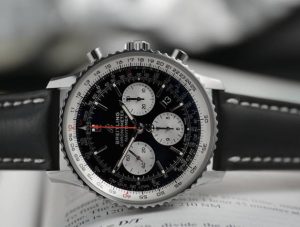
Best known for: Navitimer, Superocean, Avenger, Chronomat
Best suited for: Aviation and dive enthusiasts, tool watch buyers, active lifestyle collectors
Breitling has always built watches for professionals first. The Navitimer, introduced in 1952 with its circular slide rule bezel for in-flight calculations, is one of the most technically purposeful watch designs ever produced. The Superocean is a credible professional dive instrument. The Avenger is sized and built for gloved hands in demanding environments.
It is worth acknowledging that Breitling has been evolving its brand identity since 2017 under CEO Georges Kern. The current positioning leans into a broader adventure and outdoor lifestyle narrative, expanding beyond pure aviation without abandoning the technical heritage. The catalog now includes more accessible sizing, a stronger focus on sustainability through its use of recycled materials, and a design language that feels more contemporary.
For collectors, Breitling offers strong technical content and reliable chronometer-certified movements at prices that feel fair relative to what you receive. Vintage Navitimers with their original slide rules and dials in honest condition are increasingly collected by enthusiasts who appreciate tool watch history.
For owners: Breitling’s slide rule bezels and column-wheel chronograph mechanisms require knowledgeable service. Our professional Breitling watch service guide outlines what proper care looks like.
How to Choose the Right Luxury Watch in 2026
With ten strong options, the decision comes down to knowing what you actually want from the watch. These questions will get you there faster than any specification list.
What Is Your Budget?
The table below gives a realistic sense of entry points across all ten brands. Note that authorized dealer availability and secondary market premiums can push popular references significantly higher than these starting prices.
| Brand | Entry Price (New) | Sweet Spot for Collectors |
|---|---|---|
| Rolex | ~$6,000 | $8,000 – $15,000 |
| Patek Philippe | ~$20,000 | $25,000+ |
| Audemars Piguet | ~$25,000 | $30,000+ |
| Omega | ~$4,000 | $6,000 – $12,000 |
| Cartier | ~$3,500 | $5,000 – $10,000 |
| TAG Heuer | ~$2,000 | $3,500 – $7,000 |
| Jaeger-LeCoultre | ~$5,000 | $8,000 – $15,000 |
| Hublot | ~$6,000 | $10,000 – $20,000 |
| IWC Schaffhausen | ~$4,000 | $6,000 – $12,000 |
| Breitling | ~$4,000 | $5,500 – $10,000 |
Prices are approximate 2026 retail starting points. Availability varies by reference and region.
What Will You Actually Wear It For?
This matters more than most buyers initially realize. A dress watch worn to the office three times a week will accumulate wear differently than a dive watch used on weekend trips. Consider:
- Daily wear: Rolex, Omega, and TAG Heuer all produce references designed for daily use with minimal babying required.
- Occasional and formal wear: Patek Philippe, Cartier, and Jaeger-LeCoultre produce watches that are at their best when the occasion calls for something refined.
- Sport and adventure: Breitling, IWC, and Omega’s Seamaster and Speedmaster lines are built around active use.
- Statement and collection pieces: Hublot and Audemars Piguet produce watches that are as much about presence as practical function.
Are You Buying New, Pre-Owned, or Vintage?
Each path has its own logic. New watches come with manufacturer warranties and current production finishing. Pre-owned watches offer better value per dollar and access to discontinued references. Vintage watches connect you directly to watchmaking history but require careful authentication.
If you are considering pre-owned or vintage, authentication is non-negotiable. Our guide on how to spot a fake luxury watch covers the key things to check before any purchase.
For those new to collecting who want a broader foundation before spending, our beginner’s guide to starting a luxury watch collection without breaking the bank is a useful next step.
What to Look for in Materials and Movement
Case materials affect weight, durability, and aesthetics in equal measure:
- Stainless steel is the most versatile and practical for daily use
- Gold (yellow, rose, or white) adds warmth and prestige, and is traditionally associated with dress watches
- Titanium is lighter than steel and more resistant to corrosion, popular in larger-cased tool watches
- Ceramic is highly scratch-resistant and increasingly common in bezels and full cases
Movement type shapes the ownership experience:
- Automatic (self-winding) movements power themselves through wrist motion, making them ideal for regular wear
- Manual (hand-wound) movements require daily winding and are often found in thinner dress watches or high-complication pieces
- Quartz movements are accurate and low-maintenance but carry less collectible appeal in the luxury segment
Planning for Long-Term Ownership
A luxury watch requires periodic servicing to maintain accuracy and protect its condition. Service intervals vary by brand and reference, typically ranging from five to ten years. The cost of a service can range from a few hundred to several thousand dollars, depending on the complexity of the movement and the brand involved.
Keeping the original box and papers, maintaining records of service history, and using a qualified watchmaker are the three habits that most reliably protect both the function and the resale value of your watch. For more detail on this, our guide on luxury watch repair and preserving value covers what proper care actually looks like over time.
It is also worth reading our advice on caring for your watch between professional services, which covers daily habits that extend the life of your timepiece without requiring a trip to the watchmaker.
Brand Comparison at a Glance
| Brand | Best For | Signature Style | Investment Potential |
|---|---|---|---|
| Rolex | Versatile daily use | Sporty, robust | Very High |
| Patek Philippe | Complications, heirlooms | Refined, understated | Highest |
| Audemars Piguet | Sports luxury | Architectural, bold | Very High |
| Omega | History, sport | Technical, versatile | Moderate-High |
| Cartier | Elegant occasions | Artistic, distinctive | Moderate |
| TAG Heuer | Motorsport, chronographs | Dynamic, sporty | Moderate |
| Jaeger-LeCoultre | Complications, connoisseurs | Sophisticated, nuanced | Moderate-High |
| Hublot | Statement pieces | Bold, contemporary | Moderate |
| IWC Schaffhausen | Aviation, tool watches | Clean, purposeful | Moderate |
| Breitling | Adventure, precision | Technical, rugged | Moderate |
Frequently Asked Questions
What is the most popular luxury watch brand in 2026?
Rolex remains the most widely recognized and purchased luxury watch brand globally. Its combination of consistent quality, strong secondary market demand, and universal name recognition keeps it at the top of most lists. The Submariner and Datejust are among the best-selling references in the luxury category.
What is a good first luxury watch to buy?
For most buyers, a steel Rolex sports model such as a Submariner or GMT-Master II represents the most versatile, durable, and resalable entry point. If Rolex availability is a challenge at retail, an Omega Speedmaster or Seamaster offers genuine mechanical credibility and strong collector appeal at a more accessible price. For a dress-focused first purchase, a Cartier Santos or Tank delivers instant recognition and a design that holds up over decades.
Should I insure a luxury watch?
Yes. Any watch valued above a few thousand dollars should be covered by a specialist watch insurance policy rather than relying on standard home contents insurance, which often has low per-item limits and exclusions for accidental damage or theft outside the home. Policies through dedicated insurers typically cover loss, theft, accidental damage, and mysterious disappearance. Keep photos, serial numbers, and purchase receipts on file to simplify any future claim.
Is a luxury watch a good gift for someone who does not collect watches?
It can be, provided you match the watch to the person rather than the brand ranking. Non-collectors are generally better served by something immediately recognizable and easy to wear daily, a classic Cartier Tank, an Omega Seamaster, or a steel Rolex Datejust rather than a complication piece that rewards insider knowledge. Avoid oversized cases and bold designs unless you know the recipient well. When in doubt, a clean, time-only watch in steel or two-tone metal from a well-known brand is the most reliably appreciated choice.
For a deeper look at what separates a great watch from a great investment, the Ultimate Guide to Luxury Watches 2026 covers the full picture in one place.