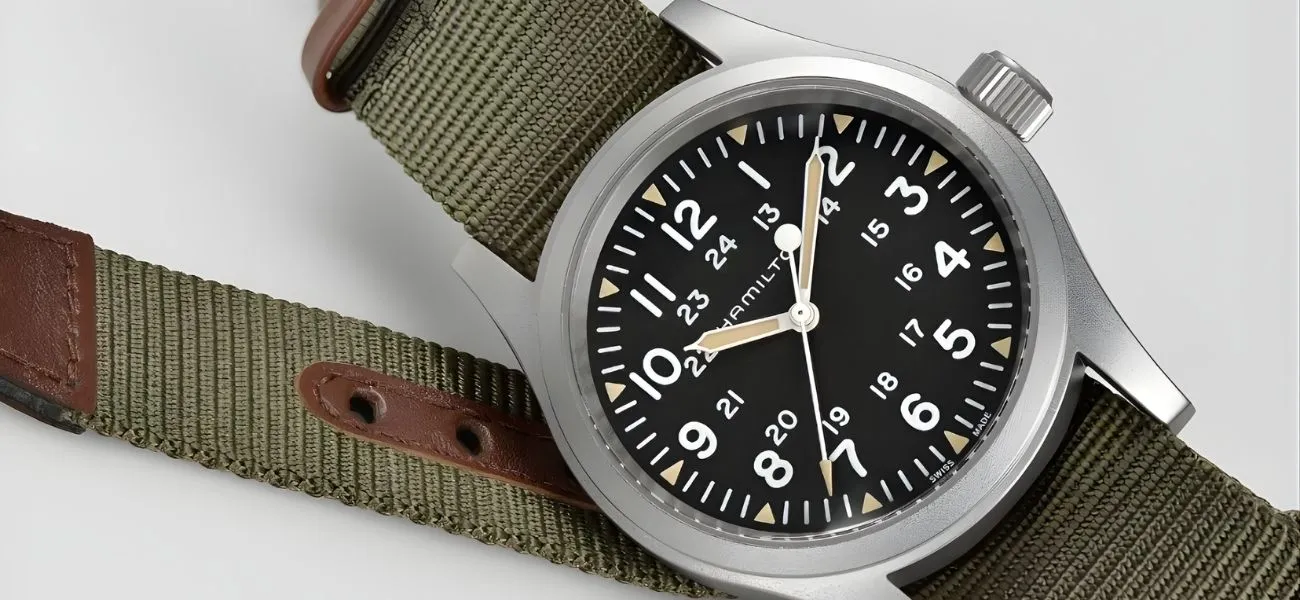
A field watch is a rugged, highly legible timepiece built around large numerals, luminous markers and a slim case. Originally designed for military use, it has become one of the most versatile watches for everyday wear. That simplicity is why it works under a dress shirt, on a trail or at a desk without ever feeling out of place.
If you are narrowing down your first, or next, field watch, the guide below focuses on what matters most and several worthwhile options across different budgets.
Key Takeaways
- ✓Legibility comes first. High-contrast dials, large numerals and luminous markers are fundamental to the category.
- ✓36mm to 40mm is a versatile size range. Those dimensions work with the widest range of wrists and outfits.
- ✓Match the movement to your routine. Quartz is low-maintenance, automatic adds mechanical appeal, and solar offers practical convenience.
- ✓Water resistance needs maintenance. A factory rating holds up only when gaskets are inspected and the watch is pressure tested periodically.
- ✓Strong choices span every price point. The category runs from simple budget quartz pieces to Swiss automatics that set the benchmark.
What Is a Field Watch?
A field watch is a compact, highly legible timepiece designed for quick reading in any light and built to survive daily wear and rough handling. The category traces back to military watches made for soldiers who needed to check the time at a glance, often in low light or difficult conditions.
That history shaped the design language still used today: clean dials with minimal clutter, bold Arabic numerals, prominent lume and cases sized for practicality rather than show. Most field watches sit between 36mm and 40mm—small enough to slide under a cuff, but substantial enough to read outdoors without squinting.
Field Watches at a Glance
| Feature | Typical Specification |
|---|---|
| Case size | 36mm to 40mm |
| Dial style | High contrast, bold Arabic numerals and minimal clutter |
| Lume | Luminous hands and markers for low-light reading |
| Water resistance | 50 meters as a baseline; 100 meters for more active daily use |
| Movement options | Quartz, automatic or solar |
| Strap versatility | Leather, NATO or canvas on quick-release spring bars |
Field Watches Worth Considering for Everyday Wear
Timex Expedition Scout: An Accessible Starting Point
The Timex Expedition Scout is a brass-cased quartz watch with a mineral crystal and an internal 24-hour dial ring. Its water resistance is modest, so it suits light daily use rather than heavy outdoor abuse, but it is a low-risk way to explore the field-watch style before spending more.
Seiko 5 Sports SRPG: An Affordable Automatic
This 39.4mm stainless-steel automatic uses Seiko’s in-house 4R36 movement with a 41-hour power reserve and 100 meters of water resistance. It offers genuine mechanical character and real day-to-day durability at a price below most Swiss alternatives.
Citizen Promaster: Solar Powered and Low Maintenance
Citizen’s Eco-Drive solar movement charges from any light source and stores enough power for months, so it needs little attention between wears. It is a strong option if you want field-watch utility without regular battery changes or a winder.
Hamilton Khaki Field Auto: The Swiss Benchmark
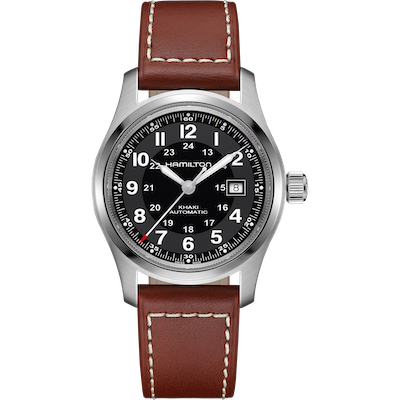
Hamilton’s Khaki Field is commonly treated as the category benchmark. The modern automatic version uses the H-10 movement with an 80-hour power reserve, sapphire crystal and 100 meters of water resistance. It remains a clear reference point for buyers considering their first Swiss field watch.
Marathon GSAR: Built for Serious Use
Designed to military specifications, the GSAR uses a Swiss automatic movement, 300 meters of water resistance and tritium tubes that glow continuously without charging. It offers far more margin than most everyday wearers need, but that is the point for buyers who encounter genuinely rough conditions.
For a more historically specific alternative, the Benrus DTU-2A/P field-watch review examines a compact 34mm reissue with documented Vietnam-era military provenance, an ETA movement and a very different approach to field-watch proportions.
Pro Tip
Straps make a larger difference than many buyers expect. One field watch can cover several looks with leather, NATO and canvas options, so choose a case with versatile lugs and consider keeping more than one strap on hand.
Quartz, Automatic or Solar: Which Fits Your Routine?
| Movement | Maintenance | Best For |
|---|---|---|
| Quartz | Battery replacement every few years | Set-it-and-forget-it daily wear |
| Automatic | Regular wear or a winder; periodic mechanical service | Buyers who value mechanical craftsmanship |
| Solar | Rarely needs attention | Low upkeep without conventional battery changes |
If you choose an automatic, pay attention to power reserve. Hamilton’s H-10 can run for about 80 hours, which means it can sit from Friday evening to Monday morning and still be running. Common alternatives such as Seiko’s 4R36 offer reserves closer to 40 to 41 hours, so they need more frequent resetting if you rotate watches.
Water-Resistance Note
A water-resistance rating only describes the watch when it leaves the factory. Gaskets can compress and lose elasticity over time, particularly on a daily wearer. Periodic water-resistance checks and pressure testing matter more than the number printed on the dial.
What to Look for Before You Buy
- Legibility first: If you have to think about reading the dial, the design has failed at its core job.
- Case size for your wrist: 36mm to 38mm suits smaller wrists and dressier looks, while 40mm and up leans more rugged.
- Water-resistance baseline: 50 meters covers daily splashes and rain; 100 meters gives more margin for active wear.
- Strap versatility: Quick-release spring bars make it easier to change the character of one watch without special tools.
The Bottom Line
Field watches are built for legibility and durability first, which is what makes them so wearable day to day. Good choices exist at every price point, from budget quartz to Swiss automatics. Match the movement to your routine, look past the headline diameter to proportions and water resistance, and try on a few designs when possible.
Field Watch FAQ
What Makes a Watch a Field Watch?
A field watch is defined by a highly legible dial built for quick reading in any light. Large Arabic numerals, minimal clutter, luminous hands and markers, and a compact case all trace back to military timepieces designed for soldiers who needed the time at a glance.
Are Field Watches Good for Everyday Wear?
Yes. Field watches are among the most versatile categories for daily use. Their clean design works with business casual, outdoor activity and everything in between, while their durable construction holds up to regular wear.
What Is the Difference Between a Field Watch and a Dive Watch?
A field watch prioritizes legibility and a slim, wearable case. A dive watch focuses on underwater use with rotating bezels, screw-down crowns and higher water resistance. Both can be rugged, but a field watch is the more versatile daily choice for many people.
Should I Get an Automatic or Quartz Field Watch?
Quartz is the better choice for low maintenance and consistent accuracy with minimal attention. Automatics need regular wear or a winder to stay running, but many buyers value their mechanical craftsmanship enough to accept that tradeoff.
How Often Does a Field Watch Need Service?
Most automatic field watches benefit from service every three to five years as a general guideline, although interval needs vary by movement and usage. Check the documentation for your specific model and consult a qualified watchmaker when in doubt.
Does It’s About Time Inc. Service Field Watches?
Yes. It’s About Time Inc. services field watches from several manufacturers, including Hamilton, Seiko and Citizen. Contact the team or visit the workshop to discuss a particular model.