Citizen watch repair in Johns Creek, GA from It’s About Time

The Difference Between Entry-Level and High-End Luxury Watches

You know you want a luxury watch. What you may not know is how wide the gap is between a solid entry-level piece and a high-end timepiece, or why that gap exists. The differences go well beyond price. They show up in the movement, the materials, how the watch is finished, and how it holds its value over time.

Whether you’re considering your first luxury purchase or weighing an upgrade, the details covered here will help you spend with clarity and confidence.

Key Takeaways

  • Entry-level luxury watches offer reliable Swiss or Japanese movements, sapphire crystals, and respected brand heritage at accessible prices.
  • High-end luxury watches feature hand-assembled movements, precious metals, and complex complications that can take months to produce.
  • Material selection, movement finishing, and production volume are the biggest factors separating the two categories.
  • High-end pieces from established manufacturers tend to hold or gain value over time. Entry-level models offer prestige and quality but less consistent appreciation.
  • The right choice depends on your priorities: daily wearability, long-term value, or the craftsmanship itself.

What Makes a Watch “Luxury”?

A luxury watch separates itself from mass-market alternatives through precision engineering, carefully chosen materials, and a brand heritage that spans decades or centuries. These timepieces are built to be serviced, maintained, and passed along rather than replaced.

Both entry-level and high-end luxury watches share that foundation. The difference is in degree: how much of the work is done by hand, how rare the materials are, and how limited the production run is.

The Role of Movement and Finishing

Entry-level luxury watches typically use reliable Swiss or Japanese calibers that are partially machine-assembled, then regulated and finished by trained watchmakers. These movements keep excellent time and hold up well with routine service.

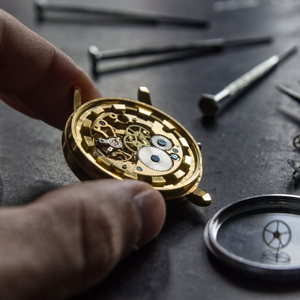
High-end watches take a different approach. Movements are assembled entirely by hand, often by a single watchmaker over the course of weeks. Individual components receive hand-beveled edges, polished surfaces, and decorative finishing that you can see through a display caseback. This level of work directly affects both the longevity of the movement and its collectibility.

Pro Tip: When evaluating a luxury watch, look at the movement through the caseback if one is available. Hand-finished bridges, polished screw heads, and Geneva striping indicate a higher level of craftsmanship. Machine-finished movements are reliable, but hand-finished ones show the watchmaker’s skill.

Materials That Set the Categories Apart

At the entry level, expect high-grade stainless steel cases, sapphire crystal glass, and ceramic or titanium accents. These materials are durable, scratch-resistant, and look sharp for years with basic care.

High-end pieces use platinum, 18k gold, and precious stones. Some manufacturers work with exotic dial materials like meteorite, aventurine, or grand feu enamel. These choices raise the watch’s visual presence and its intrinsic material value.

Entry-Level Luxury Watches: Where Quality Meets Accessibility

Entry-level luxury watches are the practical starting point for anyone who wants real watchmaking without a six-figure commitment. Brands in this space combine respected heritage with reliable calibers and quality finishing.

For many collectors, a first purchase from this category starts a lifelong interest. The watches wear well, hold up to daily use, and offer a noticeable step up from fashion and mass-market brands.

Brands Worth Knowing

Several manufacturers consistently deliver strong value in this segment. Hamilton blends American heritage with Swiss precision across dress and field watch styles. TAG Heuer brings sporty design and chronograph capability through their Aquaracer and Carrera lines. Longines offers classical elegance in the Master Collection, backed by one of the longest-running brand histories in Swiss watchmaking.

Tudor, produced under the Rolex umbrella, gives you professional-grade construction and in-house movements at more accessible prices. Oris stands out for its commitment to mechanical-only production. And Seiko’s Prospex and Presage lines blur the boundary between affordable and luxury with vertically integrated manufacturing.

What Your Money Gets You

At this level, you’re paying for a meaningful upgrade over fashion watches: Swiss or Japanese movements with proven track records, sapphire crystals instead of mineral glass, better case finishing, and brand service networks that keep the watch running for decades. These are not display pieces. They are built to be worn every day.

High-End Luxury Watches: Craftsmanship at the Highest Level

High-end luxury watches represent months or years of work per piece. Every component is shaped, finished, and assembled by hand. Production runs are limited, and the waiting lists for some references stretch for years.

Owning a watch at this level connects you to centuries of horological tradition. These are not just timekeepers. They are mechanical achievements with lasting collectible and financial value.

The Brands That Define the Category

Patek Philippe, Audemars Piguet, and Vacheron Constantin sit at the top of most collector rankings, and for good reason. Each has a multi-century track record of innovation, from perpetual calendars to ultra-thin calibers. Rolex bridges the gap between tool-watch reliability and luxury status, with a secondary market track record that outpaces most traditional investments.

A. Lange & Söhne, Jaeger-LeCoultre, and Breguet round out the upper tier with distinct mechanical philosophies and instantly recognizable design languages.

Complications That Set High-End Apart

Complications are mechanical functions beyond basic timekeeping, and they are a defining feature of high-end watchmaking. Perpetual calendars track the date, day, month, and leap year cycle without adjustment. Tourbillons counteract gravitational effects on the balance wheel. Minute repeaters use tiny hammers and gongs to chime the time audibly on demand.

Each of these complications adds hundreds of additional parts to the movement and requires specialized skill to build and regulate. That is why they appear almost exclusively in high-end pieces.

Pro Tip: If you are drawn to complications, start by understanding what each one actually does before paying a premium for it. A chronograph is practical for everyday timing. A moon phase is beautiful but rarely essential. A perpetual calendar saves you from adjusting the date at the end of short months. Match the complication to how you live, not just how it looks on the wrist.

Already Own a Luxury Watch?

Whether it is an entry-level TAG Heuer or a high-end Patek Philippe, your watch needs a specialist who knows the difference. Our WOSTEP- and Swiss-certified watchmakers service luxury timepieces in-house using manufacturer-sourced parts.

Request a Repair

Entry-Level vs. High-End: How the Two Compare

Entry-Level Luxury High-End Luxury
Movement assembly Machine-assisted, hand-regulated Fully hand-assembled and finished
Case materials Stainless steel, titanium, ceramic Platinum, 18k gold, precious stones
Crystal Sapphire Sapphire (often with AR coating or box sapphire)
Production volume Higher, widely available Limited runs, often with waiting lists
Complications Date, chronograph, GMT Perpetual calendar, tourbillon, minute repeater
Value retention Moderate, brand-dependent Strong, especially from established houses
Best suited for Daily wear, first luxury purchase Collecting, long-term value, special occasions

The Craftsmanship Gap

The practical difference comes down to finishing. An entry-level caliber runs well and keeps time within chronometer standards. A high-end caliber does the same, but every visible surface has been individually polished, beveled, or engraved. That hand-finishing is what drives both the price and the collectibility.

Value Over Time

High-end watches from Rolex, Patek Philippe, and Audemars Piguet have shown consistent value retention on the secondary market. Certain discontinued references have appreciated significantly. Entry-level pieces hold less resale value in general, though specific vintage models from brands like Tudor and Omega have performed well among patient collectors.

How to Choose the Right Category for You

The decision between entry-level and high-end is not just about budget. It is about what you want the watch to do in your life.

If you want a reliable, well-built daily wearer from a respected brand, entry-level luxury gives you that without financial strain. If you are looking for a piece with generational staying power, complex mechanics, and long-term value, high-end is the category to explore.

Think About Wearability

A watch that stays in the safe is not serving you. Consider your lifestyle. Entry-level sport models from Tudor, TAG Heuer, and Longines are built to take daily wear in stride. High-end dress watches from Patek Philippe or A. Lange & Söhne may call for more careful handling.

Factor in Total Cost of Ownership

Every mechanical watch needs periodic servicing. Entry-level watches are generally less expensive to maintain. High-end pieces with complex complications require specialized watchmakers and longer service intervals, which increases the ongoing cost. Budget for service as part of your purchase decision, not as an afterthought.

Pro Tip: Before buying any luxury watch, confirm who will service it. Not every shop has the training, tools, or access to genuine parts required for specific brands. A certified service center protects both the watch’s performance and its long-term value.

Do Not Buy Purely for Investment

Some watches appreciate. Many do not. Buying with the expectation of a return introduces risk that has nothing to do with how much you enjoy wearing the piece. The best purchase is one you are happy to own regardless of what happens on the secondary market.

The Bottom Line on Entry-Level vs. High-End Luxury Watches

  • Entry-level luxury watches deliver real craftsmanship, sapphire crystals, and respected Swiss or Japanese movements at an accessible price point.
  • High-end watches earn their price through hand-assembled movements, precious materials, and limited production.
  • The right choice depends on daily wearability, service costs, and whether long-term value matters to you.
  • Every luxury watch needs a qualified specialist for service. Make sure you know who will maintain your watch before you buy it.
  • Buy what you will wear and enjoy. Investment potential is a bonus, not a strategy.
Get Expert Watch Repair You Can Trust

Ready to restore your timepiece with precision and care? Our experienced technicians handle everything from simple tune-ups to full mechanical overhauls. Let us bring your watch back to life.

Frequently Asked Questions

What is considered an entry-level luxury watch?

An entry-level luxury watch is a timepiece from a respected manufacturer that offers Swiss or Japanese mechanical or quartz movements, sapphire crystal glass, and quality case finishing at a more accessible price than high-end brands. Hamilton, TAG Heuer, Longines, Tudor, and Oris are well-known names in this category. These watches are built to last and can be serviced for decades, making them a strong starting point for anyone entering luxury watch collecting.

What makes high-end luxury watches cost so much more?

High-end luxury watches are priced for the labor, materials, and exclusivity involved in their production. Movements are assembled entirely by hand, often by a single watchmaker over weeks. Precious metals, rare dial materials, and complex complications like tourbillons and perpetual calendars add both cost and mechanical value. Limited production runs further restrict supply and support pricing.

Are entry-level luxury watches worth buying?

Yes, entry-level luxury watches offer a meaningful quality upgrade over fashion and mass-market brands. You get proven movements, scratch-resistant sapphire crystals, better case finishing, and access to manufacturer service networks. They are designed for daily wear and built to be serviced rather than replaced, which makes them a practical long-term purchase.

Do high-end luxury watches hold their value?

Many high-end luxury watches retain or increase in value, particularly models from Rolex, Patek Philippe, and Audemars Piguet. Value retention depends on brand reputation, model demand, condition, and whether the reference has been discontinued. Not every high-end watch appreciates, so research specific models before buying with resale in mind.

What features should I prioritize in a luxury watch?

Movement quality, case material, and crystal type are the most important factors. Look for mechanical or automatic movements with a track record of reliability, sapphire crystal for scratch resistance, and a case material that suits your lifestyle. Water resistance rating, power reserve, and available complications are worth evaluating based on how you plan to wear the watch.

How do I maintain a luxury watch after buying it?

Regular servicing by a qualified watchmaker is the most important step. Mechanical watches generally need a full service every five to seven years, which includes disassembly, cleaning, lubrication, and timing adjustment. Between services, avoid exposing the watch to extreme temperatures, strong magnetic fields, or impacts. If your watch is water-resistant, have the gaskets and seals checked whenever the case is opened. A certified watch repair workshop can handle all of this in-house.

Can I start with an entry-level watch and upgrade later?

Yes, and most collectors do exactly that. Starting with a well-chosen entry-level piece teaches you what you value in a watch before committing to a high-end purchase. Many collectors keep their first luxury watch even after upgrading, while others sell or trade it to fund the next piece. Either approach works, and starting with a solid foundation makes the upgrade more informed.

Scroll to Top