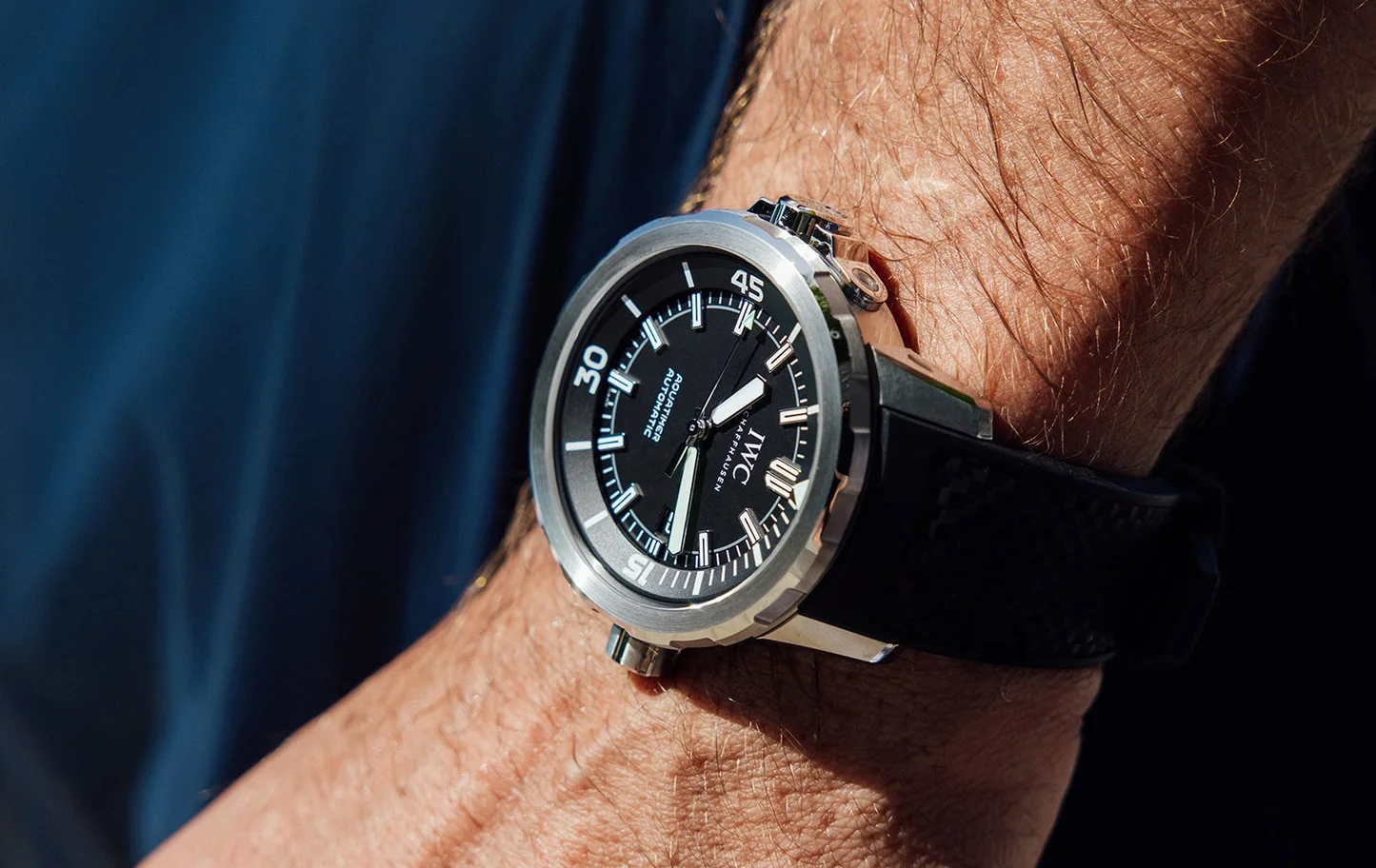
IWC Aquatimer Automatic Dive watch on a man's wrist

10 Luxury Dive Watches for Everyday Wear (That Aren’t the Submariner)

The Rolex Submariner is, by almost any measure, the best all-around dive watch ever made. It is also the most obvious one. If you already own a Submariner, you know what it can do. If you’re considering one, every watch publication on the internet has told you exactly why you should buy it.

This article is for the collector who wants to go further. The watches below are chosen because they are exceptional, because most people have never considered them, and because each one does something the Submariner doesn’t. They range from $2,500 to $12,400. Every one of them is worth wearing every day.

Key Takeaways

  • The most interesting dive watches in 2026 are not the most talked-about ones. Several of the watches on this list outperform the Submariner in specific areas: movement accuracy, power reserve, material engineering, or wearability.
  • German watchmaking is underrepresented in most dive watch lists. Sinn, Mühle-Glashütte, and Glashütte Original produce serious tool watches with Glashütte finishing credentials that most buyers overlook entirely.
  • Water resistance degrades. Every time a case is opened (for a battery replacement, movement service, or crystal replacement), gaskets should be inspected and the watch pressure tested. Most shops skip this. It is not optional.
  • Movement certification matters more than brand recognition. The Grand Seiko Ushio 300’s Spring Drive movement is accurate to ±20 seconds per year. The Oris Calibre 400 carries a 10-year service interval and 10-year warranty. These are meaningful specifications.

What Makes a Dive Watch Worth Wearing Every Day?

A dive watch earns that name by meeting the ISO 6425 standard: minimum 100m water resistance, a unidirectional rotating bezel, legible lume, a screw-down crown, and resistance to magnetic fields and shocks. Every watch on this list meets or exceeds that standard. Wearability, the quality that makes a watch you’d actually reach for every morning, is a separate question that ISO doesn’t answer.

A watch rated to 1,000m but sized at 46mm and 16mm thick is a saturation diver’s tool, not a daily companion. The watches here are chosen because they balance genuine dive credentials with the proportions and finishing that work across contexts: on the water, at a desk, across a dinner table.

For everyday wear, three specifications matter most beyond the ISO requirements: case diameter (3844mm is the workable range for most wrists), thickness (under 14mm sits under a cuff without effort), and movement quality (power reserve, accuracy rating, and service interval tell you more about a watch than its depth rating ever will).

Quick Reference: Key Terms

  • ISO 6425: The international standard defining a dive watch. Requires minimum 100m water resistance, a unidirectional elapsed-time bezel, legibility in darkness, a screw-down crown, and resistance to shocks and magnetic fields. A watch without ISO 6425 certification is a water-resistant watch, not a certified diver.
  • Water resistance ratings: Expressed in meters (200m, 300m, 1,000m), these ratings reflect static pressure testing at the time of manufacture. They degrade over time as gaskets age. A watch rated 300m new may test significantly lower after several years without service.
  • Movement types: Automatic movements wind via a rotor as you wear the watch. COSC certification means the movement has been independently tested to accuracy of -4/+6 seconds per day. METAS (Omega only) certifies the complete watch to tighter tolerances including magnetic resistance. Spring Drive (Grand Seiko) is a hybrid category: a mechanical automatic regulated by a quartz-controlled brake, achieving accuracy of ±20 seconds per year without a battery.

The Watches Worth Knowing

1. Mühle-Glashütte S.A.R. Rescue-Timer

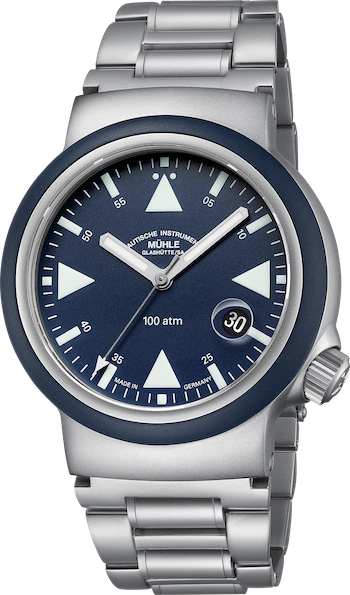
Mühle-Glashütte S.A.R. Rescue-Timer Dive WatchStarting Price: ~$2,700 | Case: 42mm steel | Water Resistance: 200m | Movement: Sellita SW200-1 with Mühle woodpecker-neck regulation

Mühle-Glashütte has been producing precision instruments in Glashütte, Germany since 1869. The S.A.R. Rescue-Timer was developed in collaboration with the German Maritime Search and Rescue Service, the same organization that runs sea rescues along Germany’s North Sea and Baltic coasts. This is not a watch that was designed to look like a tool. It was designed to be one.

What separates a Mühle movement from a standard Sellita base is the woodpecker-neck regulation: a proprietary regulating system that the brand has applied to every movement it produces, improving accuracy and consistency under the kind of conditions a working rescue watch actually faces. The 42mm steel case uses a rubber bezel for shock absorption rather than the ceramic or aluminum inserts found on most dive watches, which adds to the utilitarian character. The brand is almost completely unknown outside enthusiast circles in the United States, which makes owning one a quiet statement.

IAT customers have brought Mühle-Glashütte watches in for service, and having a watchmaker who has worked on this movement is not a small thing when you need it.

Style note: The nautical blue dial with white markers on a matching rubber strap is the most distinctive configuration. The black version is more understated. Either works equally well from a boat to a boardroom.

Pro Tip: Glashütte watches carry a protected designation of origin, similar to Champagne or Parmesan. A watch labeled “Glashütte” must have at least 50% of its movement value produced in the town of Glashütte, Saxony. When you see that name on a dial, it carries legal weight, not just marketing language.

2. Doxa Sub 300

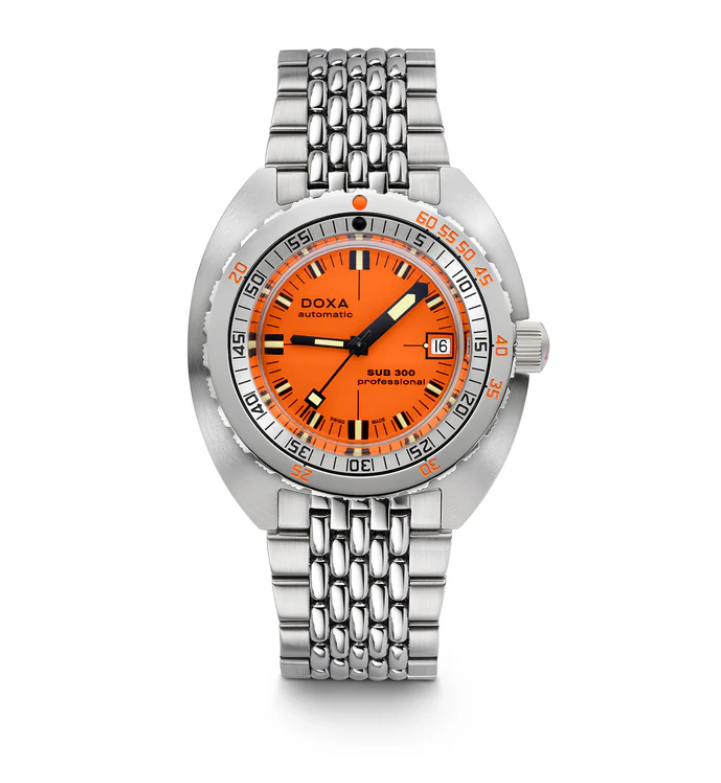
DOXA SUB 300 Dive WatchStarting Price: from $2,550 | Case: 42.5mm steel | Water Resistance: 300m | Movement: Swiss automatic, 38-hour power reserve

In 1967, Doxa introduced the Sub 300 as the first dive watch purpose-built for recreational divers rather than military or professional use. It came with a patented dual-scale bezel showing both dive time and safe ascent depth, a practical tool for avoiding decompression sickness. Jacques Cousteau wore one. The U.S. Navy SEAL teams wore them. Sub Club members included Hans Hass and the cast of the original Sea Hunt television series.

The modern Sub 300 is a direct continuation of that original, not a tribute watch or a reissue. The cushion case shape, the bold typography, the orange-and-black Professional colorway: all trace directly to the 1967 design brief. The Searambler in silver with an orange minute hand is the most wearable of the three dial options: distinctive without the full commitment of the all-orange Professional dial. The short lug-to-lug of 45mm means this 42.5mm case wears significantly smaller than its diameter suggests. Note: COSC chronometer certification has varied across Doxa Sub 300 references and movement suppliers; confirm certification status for the specific reference before purchase.

Style note: The Professional in orange is the historically correct choice and carries the full Cousteau connection. The Searambler silver is the more versatile daily wearer. The Whitepearl in white is for collectors who want the rarest of the three original colorways.

3. Sinn U1 S

Sinn U1 S Dive Watch

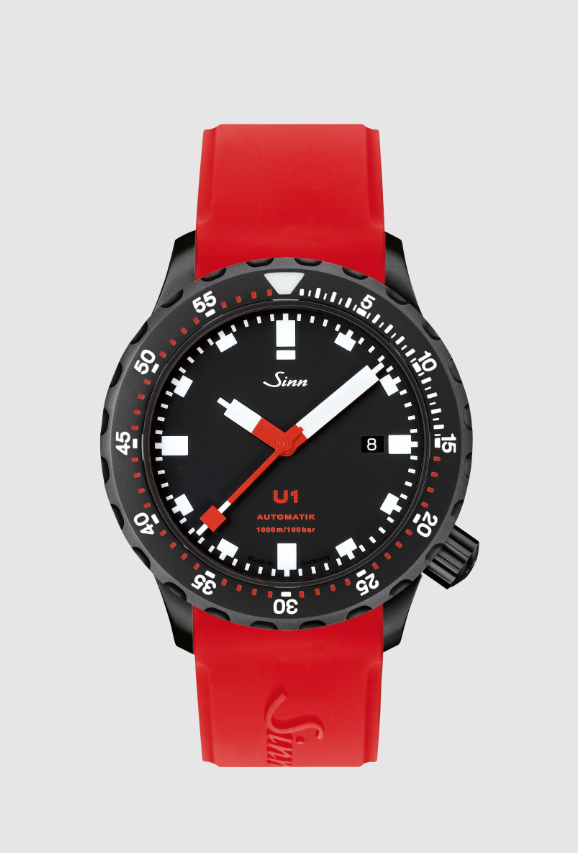
Starting Price: from $2,840 | Case: 44mm submarine steel | Water Resistance: 1,000m | Movement: Sellita SW200-1, 38-hour power reserve

The Sinn U1 case is machined from steel sourced from German submarine construction programs. This is not a marketing claim, and Sinn publishes technical documentation confirming the material sourcing that readers can verify directly. Separately, Sinn applies its proprietary Tegiment hardening process to the case surfaces, which increases surface hardness significantly beyond what the base steel achieves alone. The two are distinct: the submarine steel is a material origin story; the Tegiment treatment is a surface engineering process. Together, they produce a case that is substantially more resistant to scratches and corrosion than standard 316L stainless. Sinn is an engineering company that makes watches, not a watch company that markets engineering.

The U1 S is the all-black variant, with a tegimented case, tegimented bracelet, and black dial. The 1,000m water resistance is achieved without a helium escape valve. The case construction itself handles the pressure requirements of saturation diving. At 44mm, this is not a small watch. But the case is engineered to wear closer to the wrist than the diameter suggests, and the weight distribution on the bracelet is notably comfortable for a tool watch of this size.

Style note: The all-black S variant is the most purposeful configuration. The standard U1 with a silver dial is more legible in some conditions. Both are equally capable. Neither is trying to be anything other than what they are.

4. Oris Aquis Date Calibre 400

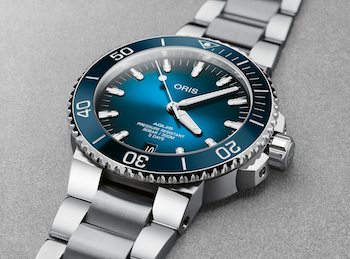
Oris Aquis Date Calibre 400 Dive WatchStarting Price: from $3,300 | Case: 41.5mm steel | Water Resistance: 300m | Movement: In-house Oris Calibre 400, 5-day power reserve, 10-year service interval

The Oris Calibre 400 changed the conversation around what an independent Swiss brand could deliver in this price range. A five-day power reserve, a 10-year recommended service interval and 10-year warranty (requires MyOris registration), and anti-magnetic resistance to 2,250 gauss. These are specifications that brands charging three times the price don’t always match. The Aquis case at 41.5mm is one of the most wearable in the category: the integrated, downturned lugs mean this watch sits flush on the wrist in a way that the case diameter alone doesn’t predict.

Oris has been independent since 1904, one of very few Swiss watch manufacturers that has never been absorbed into a larger group. The Calibre 400 represents what that independence produces when a brand invests in movement development rather than marketing budgets. Among collectors who track movement quality against price, this is one of the most discussed watches in its segment. Fratello Watches called it a new standard for automatic mechanical movements at its introduction.

Style note: The blue gradient dial is the most recognizable Aquis configuration. The green version carries more personality. For everyday office wear, either works better on the integrated steel bracelet than on rubber.

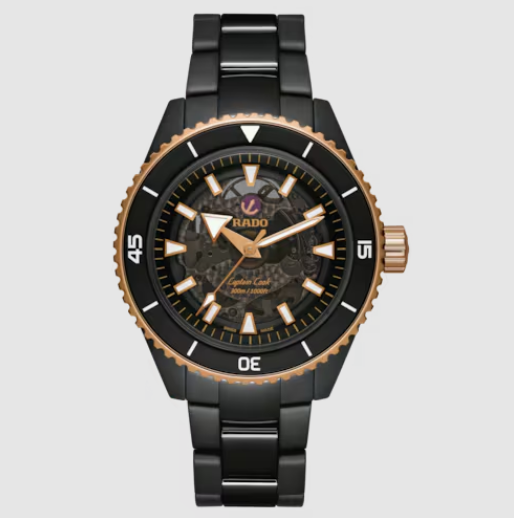
5. Rado Captain Cook High-Tech Ceramic

Rado Captain Cook High-Tech Ceramic Dive Watch

Starting Price: from $3,500 | Case: 43mm high-tech ceramic | Water Resistance: 300m | Movement: Rado Calibre R763 (Powermatic 80), 80-hour power reserve

Rado has been pioneering ceramic in watchmaking for over 35 years. Most brands use ceramic for bezel inserts. Rado builds entire cases from it. High-tech ceramic is harder than steel, essentially scratch-proof, hypoallergenic, and retains its surface finish in a way that polished or brushed steel never will. The monobloc case construction means the case and caseback are integrated, which contributes to the 300m water resistance and the ISO 6425 certification.

The Captain Cook is a watch with a genuine history; the original dates to 1962. The ceramic version builds on that design language rather than replacing it. The spinning anchor at 12 o’clock, a Rado design signature dating to the 1960s, was originally used as a service indicator. It remains on the modern watch as a nod to that heritage. The Powermatic 80 movement delivers 80 hours of power reserve, which is meaningfully useful for anyone who rotates between several watches. The plasma high-tech ceramic variant, produced at 20,000 degrees Celsius in a specialized kiln, develops a metallic sheen that reads differently from standard black ceramic, closer to gunmetal or anthracite depending on the light.

Style note: The plasma ceramic in sunray blue is the most striking configuration. The matte black ceramic is the more versatile daily wearer. Both are watches that collectors recognize and most casual observers have never seen.

Pro Tip: Ceramic cases are scratch-resistant but not indestructible. Ceramic is harder than steel but more brittle. It resists abrasion well but can chip under a sharp impact. For everyday wear this is rarely a concern, but it’s worth knowing before you set a ceramic-cased watch down on a stone countertop. A certified watchmaker can assess case condition during a routine service; catching a micro-fracture early prevents larger problems later.

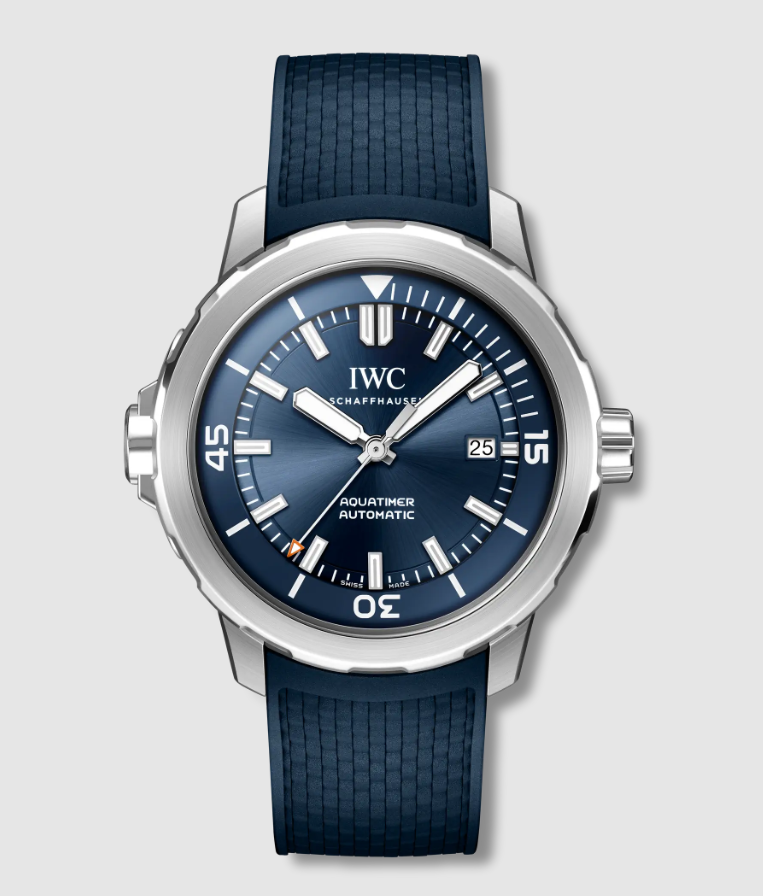
6. IWC Aquatimer Automatic

IWC Aquatimer Automatic Dive WatchStarting Price: from $6,400 | Case: 42mm steel | Water Resistance: 300m | Movement: IWC in-house Calibre 32111, 42-hour power reserve

IWC Schaffhausen has been producing watches in Switzerland since 1868. The Aquatimer is their dive watch, and its defining feature is a bezel system found nowhere else: an inner rotating bezel operated through the case, combined with a fixed outer bezel. The inner bezel moves via a crown mechanism and can be set without opening the case, which preserves the water resistance seal. The outer bezel provides a second reference point. Together, they give the diver two independent dive timing references without ever compromising the case.

This is a watchmaker’s solution to a diver’s problem, and it reflects the engineering culture at IWC more broadly. The Calibre 32111 is an in-house movement, which at this price point is expected. The finishing and reliability record across IWC’s service history puts it in a different class from modified base movements. At 42mm with a well-proportioned case, the Aquatimer wears cleanly across most contexts. It is one of the least obvious watches in IWC’s lineup and one of the most considered.

Style note: The black dial is the most legible and the most versatile. The blue dial reads warmer in person than in photographs. Both are strong. The rubber strap suits the watch’s tool character; the bracelet brings it closer to dress-sport territory.

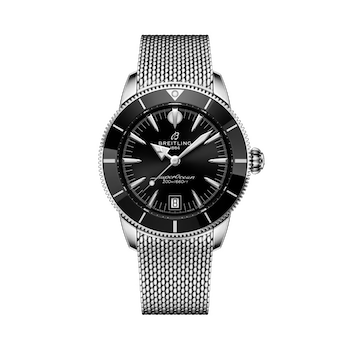
7. Breitling Superocean Heritage B31 Automatic 40

Breitling Superocean Heritage B31 Automatic 40 Dive WatchStarting Price: from $6,800 | Case: 40mm steel | Water Resistance: 200m | Movement: Breitling Manufacture Calibre B31, 100-hour power reserve

The Breitling Superocean Heritage is routinely overlooked because Breitling’s identity in most people’s minds is pilot watches. That is precisely why it belongs on this list. The B31 is Breitling’s first manufacture three-hand caliber, and it delivers 100 hours of power reserve, the highest on this list and higher than most dive watches at any price. For a collector who rotates between several pieces, five days without winding is genuinely useful.

At 40mm, the Superocean Heritage is the most wearable Breitling in the lineup, without the outsized presence of a Navitimer or the sport-specific bulk of the Avenger. The domed sapphire crystal and vintage-inspired dial give it a warmth not common in modern dive watches. The flush-mounted mesh bracelet, redesigned for the current generation, eliminates the gap between case and bracelet that made earlier versions feel less refined. This is a watch that rewards knowing what you’re looking at.

Style note: The dial range is unusually wide for a dive watch: blue, green, copper, black, turquoise. The copper is the most distinctive and the most divisive. The navy blue on the mesh bracelet is the most versatile daily configuration. For Atlanta-area owners, It’s About Time Inc. provides watch repair and service for Breitling movements.

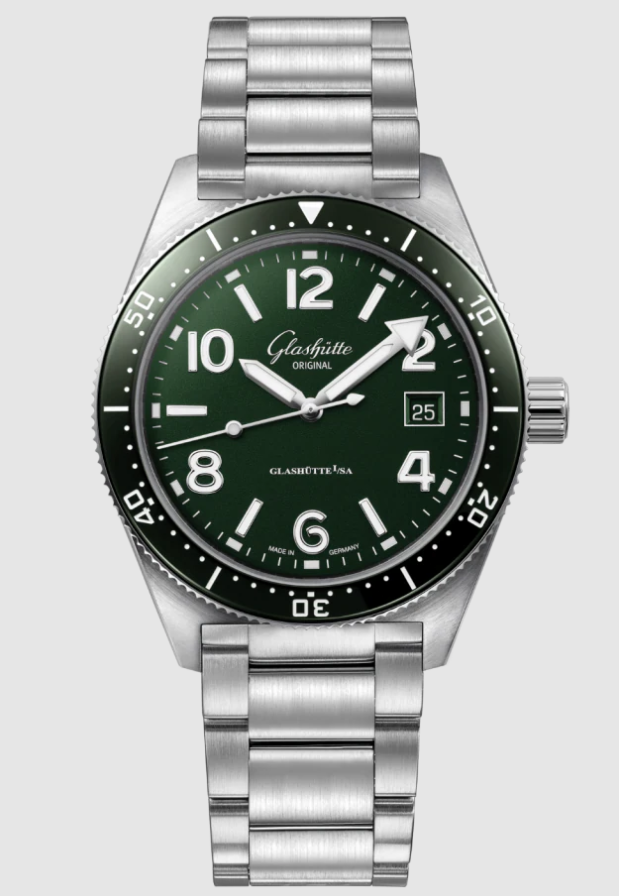
8. Glashütte Original SeaQ 39.5mm

Glashütte Original SeaQ 39.5mm Dive WatchStarting Price: from $10,300 | Case: 39.5mm steel | Water Resistance: 200m | Movement: In-house Calibre 36-13, 40-hour power reserve

Glashütte Original is one of the most respected names in German watchmaking, and almost no one outside the collector world knows they make a dive watch. The SeaQ debuted in 2019 and remains one of the most beautifully finished tool watches in production. The 39.5mm case is uncommonly wearable for a high-end diver: slim enough for a dress shirt cuff, serious enough for open water. The oscillating weight is decorated with a panoramic rotor that is visible through the exhibition caseback, a signature Glashütte Original finishing detail.

The movement finishing on the Calibre 36-13 reflects the Glashütte tradition: three-quarter plate, Glashütte ribbing, and blued screws. These are details associated with watches at two and three times the price. The SeaQ delivers them in a 39.5mm dive-rated case with a screw-down crown and a unidirectional bezel. It is the most understated watch on this list. In a room full of watch collectors, the one most likely to generate a conversation.

Style note: The blue sunburst dial is the standout. The black is cleaner for everyday wear. Both demonstrate the Glashütte finishing standard better in person than any photograph captures.

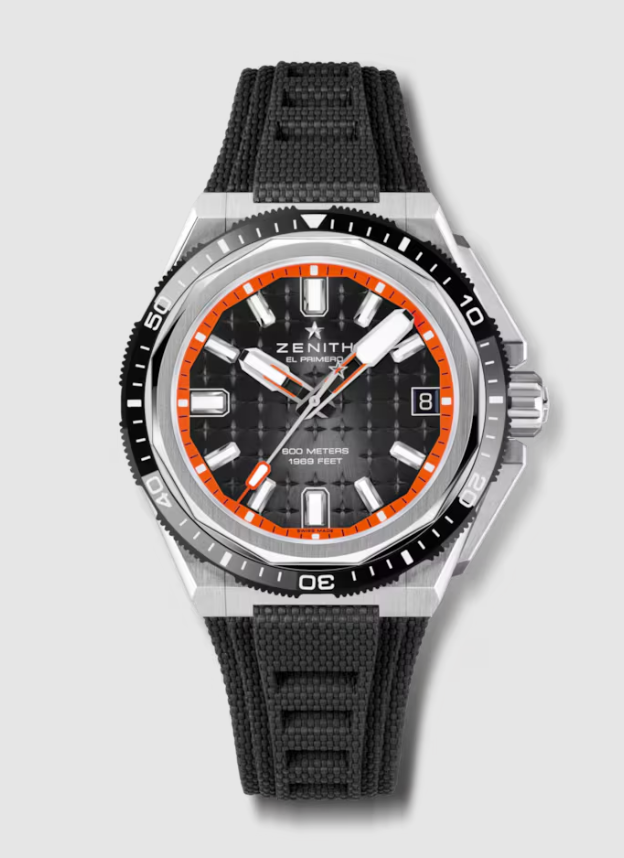
9. Zenith Defy Extreme Diver

Zenith Defy Extreme Diver Dive Watch

Starting Price: from $9,400 | Case: 42.5mm titanium | Water Resistance: 600m | Movement: El Primero 3620, 5Hz, 60-hour power reserve

Zenith’s El Primero is one of the most historically significant movements in watchmaking: the first automatic chronograph movement, introduced in 1969, and still the basis for Zenith’s high-frequency calibers today. The El Primero 3620 in the Defy Extreme Diver is a non-chronograph version of that movement, beating at 5Hz (36,000 vph) versus the 4Hz standard across most Swiss automatics. Higher frequency means finer increments of timekeeping and better resistance to positional errors, measurable differences in accuracy, not marketing specifications.

The 12-sided titanium case is rated to 600m with a helium escape valve, making this a genuine saturation diver’s instrument. The black ceramic bezel, exhibition caseback, and micro-blasted titanium finish give it a presence that reads boldly in person. For a collector who appreciates horological history and wants a dive watch with real technical credentials beyond depth ratings, the Defy Extreme Diver is the least obvious and most compelling answer.

Style note: The black and yellow colorway is distinctive and polarizing. For daily wear, the standard black and black reads more versatile. Both configurations come with three strap options, including a titanium bracelet and a cordura-effect rubber strap.

10. Grand Seiko Spring Drive Ushio 300 Diver

Grand Seiko Spring Drive Ushio 300 Diver Dive Watch

Starting Price: $12,400 | Case: 40.8mm High-Intensity Titanium | Water Resistance: 300m | Movement: Spring Drive Calibre 9RB1, ±20 seconds per year, 72-hour power reserve

Spring Drive is not a quartz movement. It is not a standard automatic. It is a third category: a mechanical automatic that uses a tri-synchro regulator (an electromagnetic brake controlled by a quartz oscillator) to regulate the mainspring energy with accuracy that mechanical escapements cannot approach. The Calibre 9RB1 in the Ushio 300 is accurate to ±20 seconds per year (approximately ±3 seconds per month) without the battery dependence of quartz, a specification confirmed on Grand Seiko’s official product page. There is no other technology in production watchmaking that achieves this.

The Ushio 300 Diver, announced for release in June 2026 (availability details subject to confirmation by authorized retailers), is Grand Seiko’s smallest dive watch to date at 40.8mm and 12.9mm thick, all in High-Intensity Titanium that is approximately 30% lighter than steel. The case and bracelet finishing reflects the Shinshu Watch Studio’s Zaratsu polishing standard: mirror surfaces ground by hand, sharp transitions between polished and brushed planes. The dial pattern is textured with the Ushio motif, referencing the tidal energy of Japan’s coastal waters. This is a watch for someone who has moved past brand recognition and into material and movement literacy.

Style note: The gradient blue dial is the most expressive. The gradient green is more unusual and carries stronger collectibility potential. Both are expected to be available through Grand Seiko boutiques and select retailers from June 2026; confirm current availability with an authorized dealer.

How to Choose the Right Watch for You

The list spans $2,400 to $12,400 and covers German tool watches, Japanese horological engineering, Swiss independent manufacture, and ceramic material science. Here is a quick frame for narrowing it down.

Watch Starting Price Case Movement Best For
Mühle-Glashütte S.A.R. Rescue-Timer ~$2,700 42mm steel Sellita + Glashütte regulation The true specialist’s choice; German heritage, genuine rescue tool pedigree
Doxa Sub 300 from $2,550 42.5mm steel COSC automatic Most historically significant design on the list; Cousteau connection is real
Sinn U1 S from $2,840 44mm submarine steel Sellita SW200-1 Maximum engineering credibility; the watch that submarine builders wear
Oris Aquis Calibre 400 from $3,300 41.5mm steel In-house Cal. 400, 5-day PR Best movement specification per dollar on the entire list
Rado Captain Cook Ceramic from $3,500 43mm ceramic Powermatic 80, 80-hr PR Ceramic case expertise nobody else has; will look new in 20 years
IWC Aquatimer Automatic from $6,400 42mm steel In-house Cal. 32111 Most ingenious bezel system in the category; Schaffhausen engineering at its best
Breitling Superocean Heritage B31 40 from $6,800 40mm steel In-house B31, 100-hr PR Highest power reserve on the list; warmest dial design; most underrated Breitling
Glashütte Original SeaQ 39.5mm from $10,300 39.5mm steel In-house Cal. 36-13 Glashütte finishing in a dive watch; the most surprising watch on this list
Zenith Defy Extreme Diver from $9,400 42.5mm titanium El Primero 3620, 5Hz El Primero heritage in a 600m tool watch; for collectors who know the movement
Grand Seiko Ushio 300 Diver $12,400 40.8mm titanium Spring Drive 9RB1, ±20s/year The most accurate mechanical movement available; finishing that has no peer

Narrow It Down

Ten watches across six countries and five decades of watchmaking heritage is a lot to narrow down. The comparison table above covers the specs. The questions below cover the rest.

  • If your priority is movement accuracy: Consider the Grand Seiko Ushio 300 (Spring Drive, ±20 seconds per year) or the Oris Aquis Calibre 400 (in-house, 5-day power reserve, 10-year service interval). Both outperform the category standard at their respective price points.
  • If your priority is case finishing and craft: Consider the Grand Seiko Ushio 300 or Glashütte Original SeaQ. Both reflect hand-finishing traditions that watches at two to three times the price rarely match.
  • If your priority is engineering credibility: Consider the Sinn U1 S (submarine steel, 1,000m, no helium valve) or the IWC Aquatimer (patented inner/outer bezel system, in-house movement). Both reflect genuine watchmaker problem-solving rather than design-first thinking.
  • If your priority is historical significance: Consider the Doxa Sub 300 (the original public diver, 1967) or the Zenith Defy Extreme Diver (El Primero movement lineage dating to 1969). Both carry provenance that goes beyond brand marketing.
  • If your priority is value per specification: Consider the Oris Aquis Calibre 400 or the Mühle-Glashütte S.A.R. Rescue-Timer. Both deliver movement quality and material credentials that significantly exceed their price points.
  • If you are buying your first serious dive watch: Consider the Doxa Sub 300 or the Oris Aquis Calibre 400. Both are accessible, both have genuine stories, and neither requires explanation to the people worth impressing.
Pro Tip: Water resistance ratings are tested at the time of manufacture. Gaskets degrade over time, through temperature cycles, UV exposure, and normal compression from daily wear. A watch rated to 300m when new may test significantly lower after five years without service. If you wear any watch on this list in water, have a certified watchmaker pressure test it every two to three years, and always after any case opening. This is the step most general repair shops skip. It is not optional for a watch you trust in the water.

When You Need a Repair, Trust Your Dive Watch to a Certified Watchmaker

It’s About Time Inc. is staffed by WOSTEP Swiss Certified watchmakers with authorized service credentials from Omega, TAG Heuer, and several other luxury brands. Walk in Monday through Saturday, 10am to 6pm. No appointment needed.

Visit Us in Johns Creek

Why These Watches End Up at IAT

The customers who walk into It’s About Time Inc. in Johns Creek are not bringing in fashion watches. They bring Breitlings with worn gaskets, vintage Seikos with movement issues, Mühle-Glashütte pieces running out of specification, Rolex watches that haven’t been opened in a decade. The pattern across years of watch repair and service is consistent: collectors who buy the right watch the first time eventually find the right watchmaker to take care of it.

WOSTEP Swiss Certified watchmakers have the training to work on these movements correctly. Authorized service credentials from Omega, TAG Heuer, and several other brands mean genuine parts and manufacturer-standard procedures. Pressure testing after every applicable case opening means your 300m watch still tests to 300m when it leaves the shop. These are not differentiators from a generic repair shop. They are the baseline for a watch that deserves proper care.

Before You Buy: What Every Collector Should Know

  • Buy from an authorized dealer. Every watch on this list has an authorized dealer network. Grey market pricing is tempting, but it affects warranty coverage and, in some cases, access to manufacturer service.
  • Budget for service. A watch purchased at $3,300 will require a movement service every five to seven years. Factor that cost into the total ownership picture before buying.
  • Find your watchmaker before you need one. The right time to identify a certified watchmaker familiar with your brand is before something goes wrong, not after. It’s About Time Inc. in Johns Creek services all brands on this list. Walk-ins welcome, Monday through Saturday.
  • Pressure test on a schedule. Water resistance degrades without visible signs. Any watch worn in water should be pressure tested every two to three years and after every case opening. Do not skip this step.
  • Service history adds value. A watch with documented service records from a certified watchmaker is worth more on the secondary market than one without. Keep records from day one.

Frequently Asked Questions

Are these watches harder to service than a Rolex or Omega?

It depends on the movement. Watches using Sellita base calibers (Sinn, Mühle-Glashütte) can be serviced by any competent watchmaker. In-house calibers from IWC, Breitling, Glashütte Original, and Oris require watchmakers who know those specific movements. Grand Seiko’s Spring Drive requires specialized training and is not a movement a general repair shop should open. In all cases, working with a certified watchmaker who has hands-on experience with the brand is not a preference. It is the correct approach.

Why doesn’t the Submariner appear on this list?

By design. This list exists specifically for collectors who already know the Submariner and want to go further. The Submariner is an excellent watch. It also appears on every other list. If you want to know whether to buy one, the answer is readily available elsewhere. If you want to know what else is worth wearing, this list is for that.

Is water resistance testing really necessary after a battery replacement?

Yes, without exception. Opening a case repositions the gaskets. Resealing it does not automatically restore the original seal. Pressure testing after every case opening is the only way to confirm water resistance is intact. A shop that skips this step after opening a water-resistant watch is not the right shop for a dive watch.

Which of these watches holds value best?

Grand Seiko Spring Drive references hold value best, particularly pieces with limited or regional distribution. Doxa, Sinn, and IWC also hold value well relative to their purchase price. Breitling and Rado tend to depreciate more on the secondary market. Across all of them, a watch worn daily and serviced properly will hold its value better than one sitting unworn in a drawer. Condition drives value, and condition comes from use and care.

Can I get any of these serviced locally in Atlanta?

Yes. It’s About Time Inc. in Johns Creek services Breitling, Mühle-Glashütte, IWC, Oris, Rado, Sinn, and Doxa, among other brands. All work is performed in-house by WOSTEP Swiss Certified watchmakers, and pressure testing is standard on all applicable services. The shop is at 11300 Medlock Bridge Rd, Suite 300, Johns Creek, GA. Walk-ins welcome Monday through Saturday, 10am to 6pm, or call 770-442-9854. Learn more about watch repair and restoration services.

Get Expert Watch Repair You Can Trust

Ready to restore your timepiece with precision and care? Our experienced technicians handle everything from simple tune-ups to full mechanical overhauls. Let us bring your watch back to life.

Scroll to Top