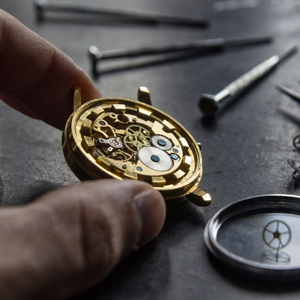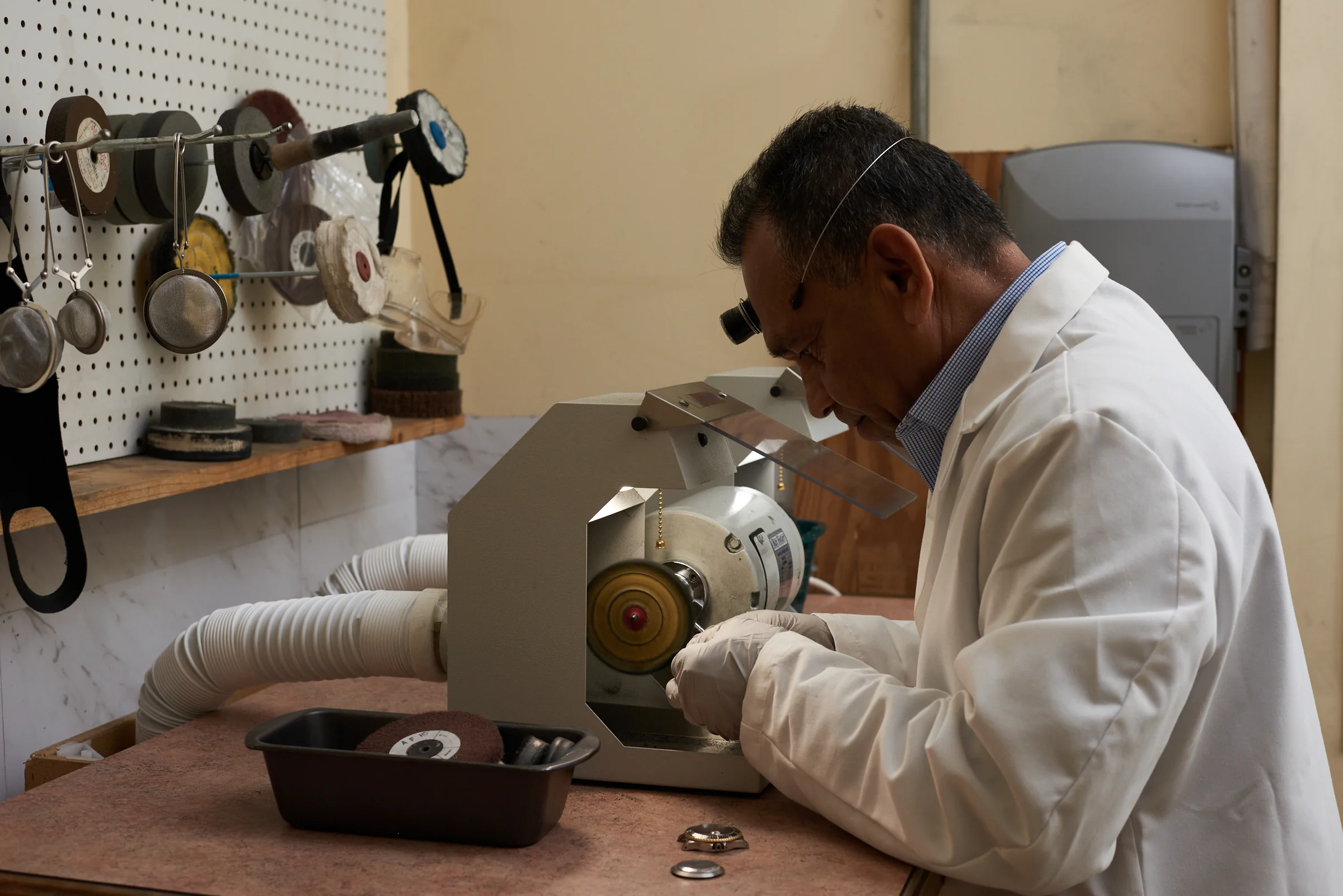
A vintage luxury watch can be a daily companion, a family heirloom, or a collectible whose history matters as much as its performance. Repair should begin with a clear goal: make the watch reliable while preserving the characteristics its owner values.
Modern luxury watches also need specialist care, but the decisions are not always the same. This guide explains how age, movement, materials, brand requirements, and intended use shape a sensible repair plan.
If a family timepiece has recently come into your care, start with our checklist for what to do with an inherited vintage watch before deciding on repairs or cosmetic changes.
Specialist Repair: Protecting Function, Originality, and History
A watchmaker needs to assess more than whether a watch runs. Wear, previous repairs, replacement parts, moisture exposure, and the condition of the case and dial all influence what should happen next. On a collectible watch, an original dial or distinctive case finish may be worth preserving even when it shows its age.
Repair and cosmetic restoration are separate decisions. Servicing a movement does not automatically require polishing the case, refinishing the dial, or replacing the hands. Agree on those choices before work begins, and ask that any proposed changes be documented. No repair can guarantee an increase in resale value.
Vintage Versus Modern Luxury Watch Repair
Vintage watches: a conservative approach
Older watches may have scarce components, worn mechanisms, fragile dial finishes, and a history of undocumented work. The correct replacement part may take time to find, and a modern-looking substitute can change the watch’s character. Ask which parts can be retained and which genuinely need replacement for function or safety.
Original luminous material on an old dial can require specialist assessment and handling. Do not scrape, clean, or disturb it yourself. A workshop should explain when a task falls outside its facilities or expertise and needs a specialist referral.
Modern watches: model-specific procedures
A newer watch may require current technical documentation, dedicated tools, movement-specific lubricants, or electronic diagnostics. Warranty status and access to appropriate parts also matter. Water resistance should be assessed and tested as appropriate after work affecting the case or seals; a replacement gasket alone is not proof that the watch is ready for swimming.
For a closer comparison, read our guide to choosing vintage Rolex restoration versus modern servicing. Age is only one factor: the exact model, condition, and intended use determine the work.
Common Challenges Encountered in Luxury Watch Repair for Vintage Models
Preserving an older watch means working around limitations that may not arise with a current model. Four challenges deserve particular attention:
- Scarcity of Original Components: Authentic replacement parts for discontinued movements can be difficult to source. Depending on the watch, a specialist may consider suitable donor components or a custom-made replacement. These are not interchangeable with new original parts: availability, compatibility, and any effect on originality should be explained before you approve the work.
- Fragile Internal Mechanisms: Hairsprings, balance assemblies, and escapement components demand precise handling. Wear or damage to these delicate parts can affect timekeeping or stop the movement. Inspection helps a watchmaker distinguish components that can be adjusted or repaired from those that need replacement.
- Material Degradation Over Time: Aging dial finishes, luminous paint, seals, and other materials can become fragile or deteriorate. Cleaning methods suitable for one component may damage another. Original luminous material should be assessed by an appropriately equipped specialist, and any proposed dial treatment or replacement should be discussed with the owner first.
- Water Damage and Corrosion: Moisture can corrode movement components and damage the dial or hands. The extent may only become clear after inspection and disassembly. Repair can involve careful cleaning and selective replacement, but severe corrosion may limit what can be recovered. Suspected water entry calls for prompt professional assessment, not continued use.
What a Careful Repair Process Should Include
Inspection and an agreed scope
Provide the model or reference if known, symptoms, available service records, and any history of impact or water exposure. Explain whether you want a wearable everyday watch or a preservation-focused restoration. Obtain an estimate describing the proposed work, parts, cosmetic options, and how additional findings will be approved.
Movement service when indicated
A complete mechanical service generally involves disassembly, inspection, cleaning of suitable components, correction of wear, lubrication, reassembly, and adjustment. Not every repair requires a complete overhaul. A competent diagnosis should explain why a targeted repair or broader service is appropriate.
Case, dial, hands, and crystal
Dial refinishing and reluming can change originality; neither should be treated as a routine cleaning step. Polishing removes material and can soften case edges if overdone. Discuss whether to leave cosmetic wear untouched, especially on vintage pieces.
A damaged crystal needs the right material, dimensions, profile, and fit. Our watch crystal replacement service explains how sapphire, mineral, and acrylic options differ and why sealing should be evaluated after replacement.
Testing and documentation
Ask what checks are included: timekeeping, movement functions, power reserve where relevant, and water-resistance testing where appropriate. Keep the invoice, parts description, test information, and written warranty terms. Confirm whether replaced parts can be returned; policies vary.
Brand-Specific Considerations: Rolex, Omega, and Patek Philippe
A brand name alone does not define a repair. The reference, movement, complications, materials, and age are more useful when assessing a workshop’s suitability. The examples below are selection guidance, not a claim that It’s About Time is authorized for every brand or accepts every model.
Rolex
Discuss the intended use, case sealing, bracelet condition, and any proposed dial, hand, or bezel replacement. For a collectible reference, make preservation preferences explicit before authorizing cosmetic work. Rolex publishes its own official service scope; ask your chosen provider to explain its scope and how it differs.
Omega
Do not assume that experience with one Omega model covers every other model. Ask about the exact movement and functions, the proposed parts, and the testing the workshop can perform. A battery-powered watch, a mechanical chronograph, and an older collectible require different diagnoses. Confirm any manufacturer-warranty requirements directly with the brand before arranging third-party work.
Patek Philippe
Complicated or historically important watches warrant particular care when selecting a service route. Patek Philippe directs owners to its authorized network in its watch-care guidance. Consult that network about the specific reference and any restoration needs rather than assuming that a general luxury-watch workshop can undertake the work.
How to Choose a Luxury Watch Repair Provider
- Ask about relevant training. Recognized watchmaking education, such as WOSTEP training and certification, can demonstrate a foundation of technical skills. It is not the same as current authorization from every manufacturer.
- Verify experience with your watch. Ask about the model, movement, complications, and vintage materials—not simply how many brands appear on a website.
- Clarify parts access and handling. Ask what parts are proposed, whether they are new or previously used, and whether work stays in-house or is sent elsewhere.
- Ask about standards and testing. Request an explanation of the applicable manufacturer procedures, inspection methods, and final checks. A generic claim of “certified” should be backed by a named qualification or authorization.
- Get the terms in writing. Confirm the estimate, approval process, expected timing, shipping arrangements, and warranty coverage and exclusions.
Explore our professional watch repair services for Atlanta-area owners and contact the team to confirm suitability for your particular watch before sending it.
Common Mistakes to Avoid Before Repair
- Choosing solely on the lowest quote without comparing the work and parts included.
- Approving “full restoration” without deciding separately on polishing, dial work, and hand replacement.
- Assuming a watch is water resistant because it was originally sold as a dive watch.
- Forcing a stuck crown, opening the case yourself, or continuing to use a watch after suspected water entry.
- Treating an estimate from photographs as a final diagnosis.
- Assuming service will raise the sale price by at least the amount spent.
Responsible Restoration and Environmental Considerations
Maintaining a serviceable watch can extend its useful life, but retaining every worn part is not always sensible. Balance preservation with function and safety. Ask for a record of replacements and disclosure of cosmetic changes so future owners are not misled about originality.
Batteries, cleaning chemicals, electronic parts, and potentially hazardous vintage materials need appropriate handling. Ask the provider how these are managed rather than assuming all repair work has the same environmental impact.
Digital and Smart Luxury Watches Need a Different Service Route
A digital quartz watch and a connected smartwatch are not the same as a mechanical watch. Electronic modules, rechargeable batteries, displays, software, and manufacturer support may determine whether repair is possible. Traditional watchmaking expertise does not by itself establish the ability to repair those systems.
For a connected watch, check the manufacturer’s current support options and data-preparation instructions. Confirm model acceptance with the repair provider first; this article does not advertise smartwatch repair by It’s About Time.
Caring for Your Watch After Service
Follow the advice supplied for the specific watch, including service and testing intervals. Protect it from impacts, moisture beyond its verified capability, and inappropriate cleaning products. Keep service records and report new condensation, erratic timekeeping, or unusual winding resistance promptly.
A watch winder is optional, not a substitute for maintenance. If you use one, confirm suitable settings for the movement. Do not assume that every vintage watch should run continuously or tolerate the same conditions as a modern watch.
Frequently Asked Questions
How long does luxury watch repair take?
Timing depends on the diagnosis, parts availability, workload, and whether specialist or manufacturer work is needed. Ask for an estimate after inspection and an update if the scope changes; a complex vintage restoration may take substantially longer than a straightforward repair.
How much does it cost?
The movement, condition, parts, and agreed work determine the cost. Request an itemized estimate rather than relying on a generic price for every luxury watch.
Will restoration increase a vintage watch’s value?
Not necessarily. Necessary functional work may help make a watch usable, while unnecessary cosmetic changes can reduce originality. Discuss your ownership or selling plans before approving work.
Are original replacement parts always available?
No. Availability varies by reference and age. Ask about alternatives, their effect on originality and performance, and whether referral is appropriate before proceeding.
What warranty should I expect?
Ask for the provider’s written warranty, including what work and parts it covers, its duration, and exclusions. A service warranty and the manufacturer’s original warranty are not interchangeable.
Start with an Assessment, Not an Assumption
Bring your service records, describe the problem, and explain what you want to preserve. A thoughtful repair plan should make the proposed work, its limitations, and your choices clear before you commit. Contact the Johns Creek workshop using the repair-request button on this page to discuss the next step.